American Traditional Tattoo Guide: Bold Lines, Flat Color, and Ink That Ages Well
Put two tattoos next to each other at the twenty-year mark. A soft grey micro-piece, all thin lines and clever shading, has gone cloudy and vague, the kind of blur you have to explain to people. A traditional eagle from the same decade still reads across a parking lot. Same skin, same decades of wear. The results look nothing alike. That gap is the entire argument for American traditional, and old-school artists have been making it since before the word "aesthetic" got attached to tattoos.
The style looks simple, which fools people. Heavy black outline, a handful of saturated colors, a subject everyone recognizes. Underneath that plainness is a set of rules built specifically to survive skin.
Where Old School Actually Comes From
American traditional grew out of port towns and military bases, then got sharpened into a language by a few obsessive artists. The name that matters most is Norman Keith Collins, working out of Honolulu's Hotel Street as Sailor Jerry. He tattooed servicemen passing through Hawaii, and he treated the trade like a craft worth improving instead of a sideshow gig.
Collins borrowed structure from Japanese tattoo masters, so his compositions wrap and sit on the body instead of floating on it. He also pushed the technical side harder than the trade expected. The Tattoo Archive's history of Collins credits him with cleaner needle groupings, his own pigments including one of the first usable purples, and early sterilization habits that most shops ignored at the time. The look reads rough and working-class. The engineering behind it was not.
That fusion is the quiet reason old school holds up. Sailor flash gave it the bold, direct subjects. Japanese composition gave it flow, placement logic, and the discipline of leaving skin open.
Bold Will Hold, and It Means Something Specific
Every traditional artist repeats "bold will hold" until it sounds like a slogan. It describes real mechanics. A thick black outline behaves like a fence around every shape. As the years soften the ink and the skin loosens, that fence keeps the color from wandering and keeps the silhouette legible. Thin unsupported lines have nothing holding them, so they spread into haze.
Separation carries the outline the rest of the way. Traditional keeps black, color, and bare skin in distinct zones instead of blending them into each other, and that clean division is what your eye locks onto from across a room, what survives thirty years of sun and stretch. Saturation does the last part of the job. Old-school color is packed in solid and flat, so even when it fades a shade it still reads as red, still reads as green, instead of graying out to nothing.
None of this makes a tattoo immortal. A lazy traditional piece ages badly like anything else. But the style stacks the odds in your favor before the needle touches skin, which is more than most styles can claim.
The Canon, and What Each Piece Was For
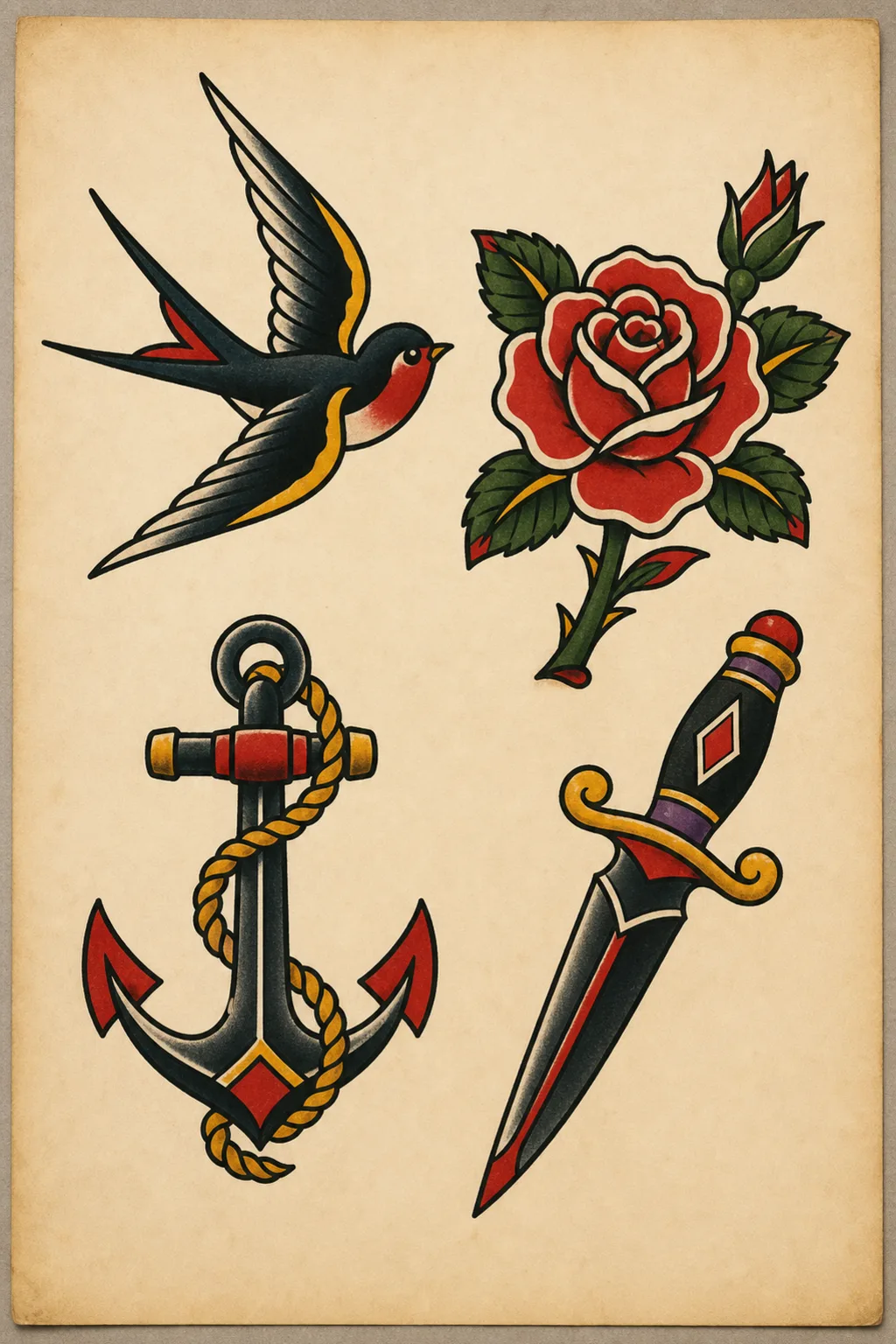
Traditional motifs carry meaning because they came from people marking real events on their skin. Sailors wore them as a record: where they had been, what they had survived, who they were coming home to. You do not have to treat that history as law, but knowing it keeps you from wearing a symbol that says the opposite of what you mean.
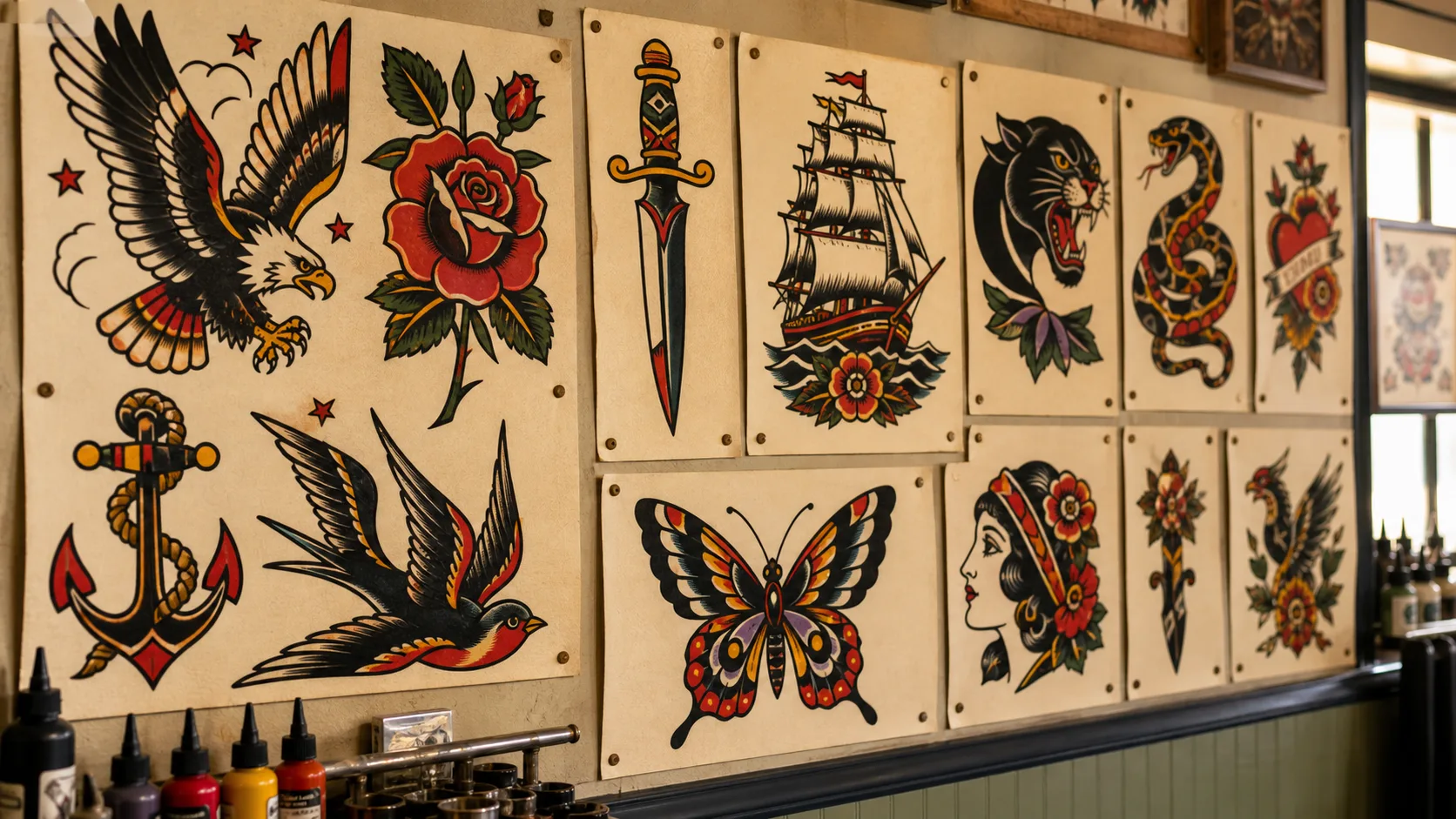
- Swallow — home and return. A swallow always finds its way back, and old sailors earned one for distance covered. It reads as loyalty and safe passage.
- Rose — the love left on shore. Soft subject, hard execution, one of the truest tests of whether an artist can pack color.
- Anchor — hold fast. Stability, a person or idea that keeps you steady. Often paired with a name banner.
- Fully rigged ship — a sailor who had rounded Cape Horn. Ambition and the willingness to cross rough water for it.
- Eagle — freedom and country, heavy in the wartime era, still a spine for big chest and back pieces.
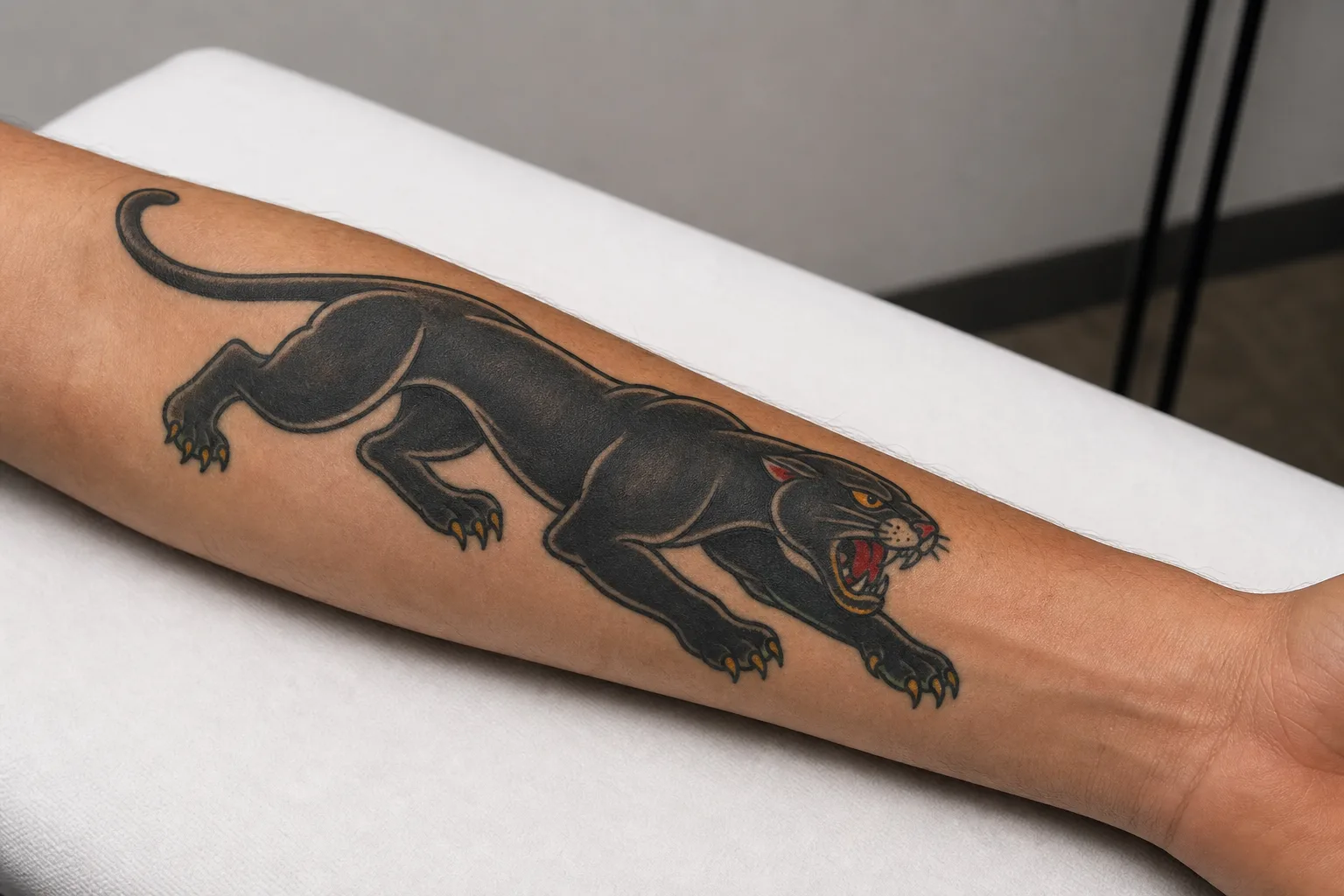
- Panther — forward motion and nerve. The crawling panther is one of the best shapes ever drawn for a forearm or calf because it moves with the muscle.
- Snake — power and self-protection, coiled to strike. It wraps a limb better than almost anything.
- Dagger — protection and sacrifice, and a favorite for piercing a rose, a heart, or a snake when the story needs an edge.
The mistake is collecting these like stickers. A traditional collector builds a body that talks to itself, matching weight and spacing so a full sleeve reads as one piece rather than a crowded scrapbook.
The Palette Stays Short on Purpose
Traditional runs on a short list of colors: a true red, a warm yellow or gold, a deep green, black for structure, and the purple Collins helped invent. Newer artists stretch it with teal and coral, but the logic stays flat and saturated.
Working narrow is the point. A limited palette forces strong choices about shape and contrast, and it keeps the piece from turning muddy as it ages. When someone asks for a "traditional tattoo but with realistic shading and a full color gradient," they are quietly asking for a different style. That is fine, it just belongs to neo-traditional, and the aging math changes with it.
Placement Is Built for Muscle
Old school was drawn for the rounded planes of the body. The outer arm, the chest cap, the thigh, the calf. Those surfaces give a bold subject a stage and let the outline follow the muscle. A crawling panther down a forearm, an eagle spread across a chest, a snake winding a calf. The style knows where it wants to live.
Scale is the rule people ignore. Traditional needs room to breathe. Shrink a design meant for a forearm down to two inches on a wrist and the outlines close up, the color fields collide, and the whole thing turns into a dark smudge within a few years. If you want something tiny, traditional is the wrong tool. If you want something that still looks like itself at retirement age, give it space.
Traditional, Neo-Traditional, New School
These three get blurred constantly, and knowing the difference helps you brief an artist without wasting a consultation. Traditional is flat, iconic, and strict: one line weight, limited color, no gradients. Neo-traditional keeps the bold primary outline but adds thinner secondary lines, richer palettes, soft shading, and illustrative depth, so it can handle portraits and detailed animals. New school pushes into cartoon territory with exaggerated proportions and wild color.
None ranks above the others. They age and photograph differently, and each one suits a different eye. Pick the lane before you fall in love with a specific drawing, because a design built for one lane rarely converts cleanly into another.
Where Traditional Goes Wrong
The failures are consistent, and most of them come from fighting the style instead of working with it. The big one is cramming fine detail into a form built for bold shapes, so the piece blurs the moment it heals. Close behind is going too small, where outlines and color fields have no room to stay apart and everything collapses into a dark smudge within a few years. Then there is watery, unsaturated color that was never packed in solid, so it fades to nothing while the black soldiers on. Chasing smooth realism inside a flat graphic language earns a spot on the same list, and so does copying a canon design with no feel for why it was drawn that way, which leaves the proportions subtly wrong.
Cover-ups are their own conversation. Traditional is one of the best styles for covering old ink because heavy black and dense color can genuinely hide what came before, but that takes a specialist who can read the existing tattoo, your skin, and the limits of pigment depth.
Healing and Aging
Solid color and packed black ask more from the healing process than a few thin lines do. Those areas swell, peel, and itch harder, and picking at them is the fastest way to pull color out. Follow your artist's instructions to the letter. The Cleveland Clinic's aftercare guidance covers the basics well: gentle washing, light moisturizing, loose clothing, and no scratching while it settles.
The longer game is sun. The American Academy of Dermatology notes that UV light breaks down tattoo ink over time, and traditional work lives or dies by saturation. A healed piece still wants sunscreen and shade if you expect the reds and greens to stay honest in twenty years. Ask any artist to show you their healed traditional work, not just fresh shots. Fresh color always looks loud. Healed color tells you whether they know how to pack it.
Designing an Old-School Piece With OpenInk
Traditional is one of the most satisfying styles to explore in an AI tattoo generator, because the rules are visible and easy to push on. You can lock the outline weight, hold the palette flat, and test how a subject sits on a specific placement before you ever book a chair.
Start with a prompt that respects the language:
"American traditional swallow tattoo for outer forearm, single bold black outline, flat saturated color, classic red and gold and green palette, no gradients, no fine shading, strong negative space, readable from across the room, tattoo flash style, designed to age well."
Then move one lever at a time:
- Thicker outline and more open skin
- Swap the subject for a crawling panther or a rigged ship
- Tighten the palette to red and black only
- Preview it wrapping a calf instead of sitting flat on an arm
- More traditional stiffness, less neo-traditional detail
For building prompts that hold their shape, read this alongside our ChatGPT Images 2.0 tattoo prompt guide, and if you want to feel how bold outlines behave against thinner work, compare it with our blackwork guide and fine line guide. When the direction is clear, take it into OpenInk's AI tattoo generator and treat old school as a system: subject, outline, palette, placement, and scale all pulling the same way.
Traditional rewards restraint. It asks you to want less on the skin and to trust that a strong, simple image will still be strong and simple long after the trend that tempted you has burned out.
Frequently asked
Why do American traditional tattoos age better than other styles?
The heavy black outline works like a fence around every shape, so as the ink softens and the skin loosens, color cannot wander and the silhouette stays legible. Two other rules finish the job. Black, color, and bare skin stay in separate zones instead of blending into each other, and color goes in solid and flat, so a red that fades a shade still reads as red instead of graying out.
What is the difference between traditional and neo-traditional tattoos?
Traditional is flat and strict: one line weight, a limited palette, no gradients. Neo-traditional keeps the bold primary outline but adds thinner secondary lines, richer color, soft shading, and illustrative depth, which is what lets it handle portraits and detailed animals. New school pushes further, into cartoon proportions and wild color. A design built for one lane rarely converts cleanly into another.
What colors are used in American traditional tattoos?
A true red, a warm yellow or gold, a deep green, black for structure, and the purple Sailor Jerry helped develop. Newer artists stretch that with teal and coral, but the logic stays flat and saturated. The narrow palette is the point: it forces strong choices about shape and contrast, and it keeps the piece from turning muddy as it ages.
How small can an American traditional tattoo be?
Big enough that the outlines and the color fields never touch. Shrink a design meant for a forearm down to two inches on a wrist and the outlines close up, the color fields collide, and the whole thing turns into a dark smudge within a few years. If you want something tiny, traditional is the wrong tool for it.
Turn this guide into a tattoo draft
Keep the motif from this article, then test style, placement, and line weight before you talk with an artist.