Blackwork Tattoo Guide: Bold Ink and Negative Space
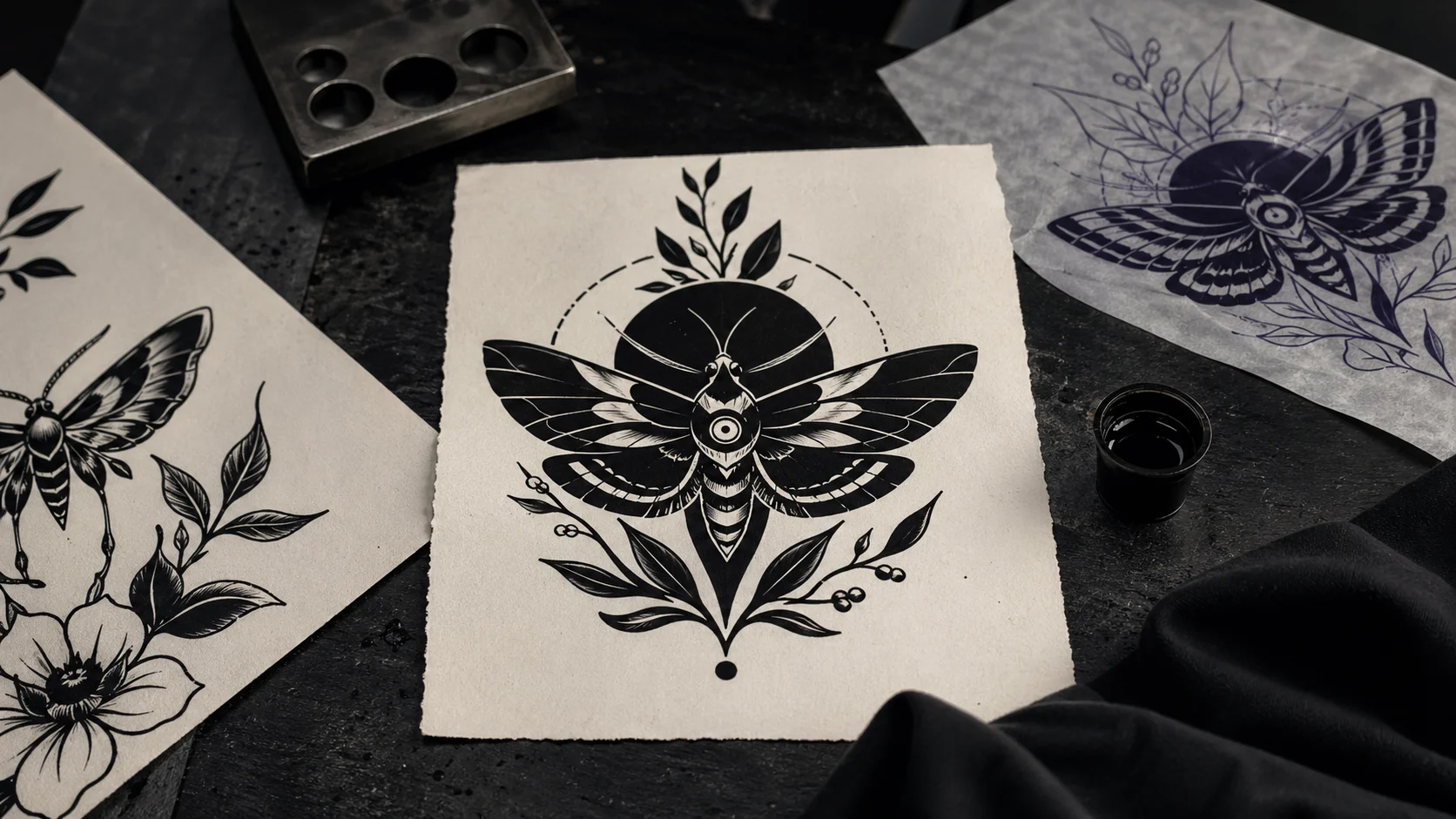
Blackwork has a simple surface: black ink, open skin, hard decisions. The style looks direct from a distance. On skin, it is brutally specific. Every filled area needs a reason. Every uninked break has to carry part of the drawing.
A strong blackwork tattoo feels carved into the body. The heavy fields give it weight, the skin breaks give it air, and the placement decides whether the piece feels like armor, ornament, shadow, or symbol.
What Blackwork Means Now
Tattoodo's blackwork style guide defines the style broadly: tattooing built from black pigment, often with solid fills, thick outlines, and intentional negative space. That broadness matters. Blackwork can mean a blackout sleeve, a geometric chest panel, an ornamental sternum piece, an illustrative raven, a botanical silhouette, or a calligraphic mark.
The style also carries older visual blood. Britannica's history of tattooing traces tattooing through many cultures, including Polynesian and Maori practices where pattern, rank, identity, and ritual all mattered. Modern blackwork borrows some of its visual power from those older traditions. That gives the style depth, and it also gives it responsibility. A contemporary blackwork piece can be abstract, graphic, or personal without copying sacred tribal patterns that belong to a culture you do not carry.
The cleanest modern blackwork pieces know which lane they are in:
- Graphic blackwork with bold silhouettes and poster-like contrast
- Ornamental blackwork built from symmetry, jewelry-like flow, and repeating shapes
- Botanical blackwork using leaves, peonies, thorns, and stems as black shapes
- Dark illustrative blackwork with ravens, moths, skulls, snakes, and mythic animals
- Blackout and cover-up work using dense fields to reshape old ink or body architecture
Negative Space Does The Real Drawing
In blackwork, skin is not empty. Skin is the second ink.
The most common weak blackwork draft fills everything it can. The result looks loud for a week, then flat forever. Strong blackwork leaves deliberate openings: wing veins cut from bare skin, leaf edges carved out of black fill, a snake body shaped by open ribbons instead of tiny scales. Those gaps keep the tattoo readable after healing.
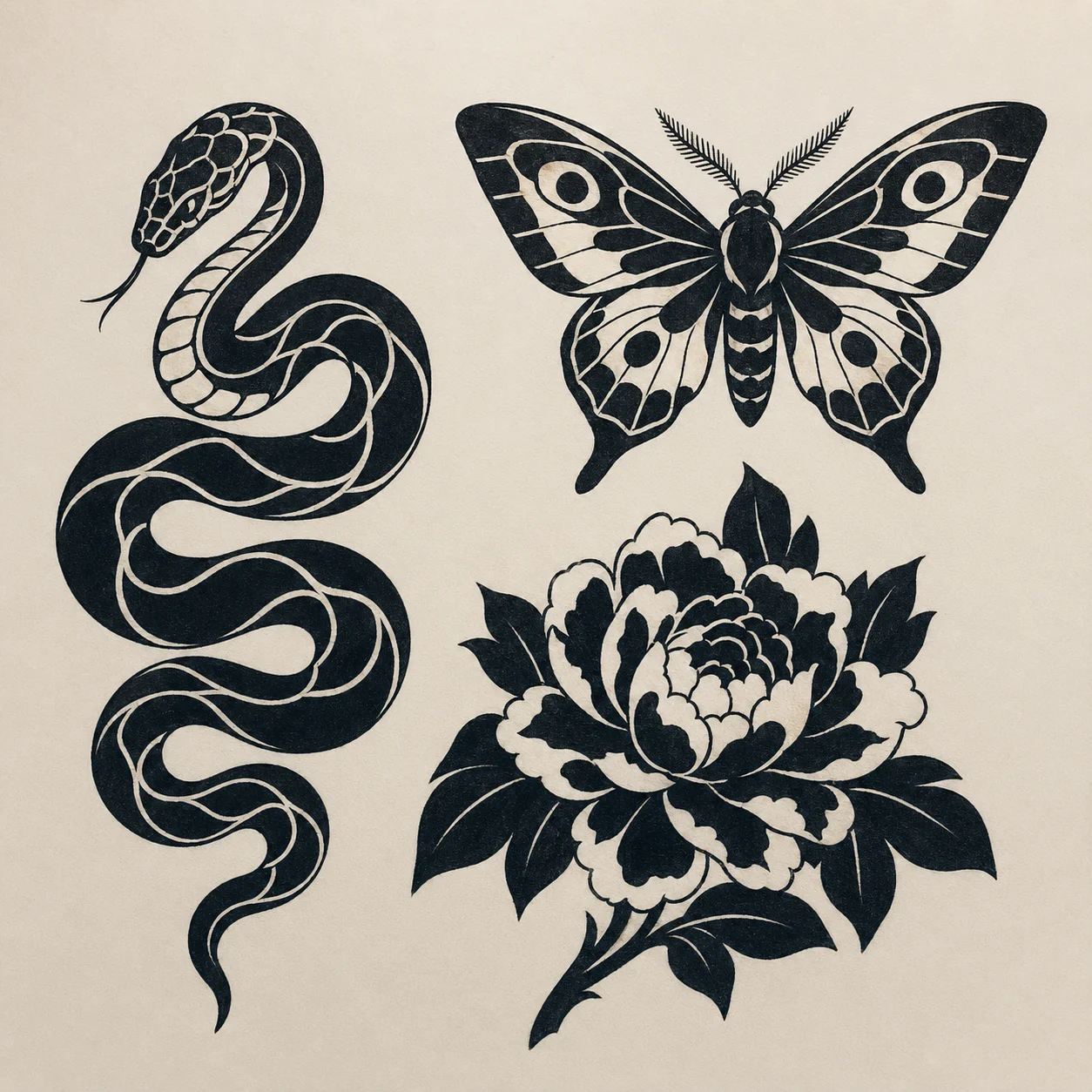
A useful test is distance. Step back from the draft until the small details disappear. If the main shape still reads, the tattoo has bones. If it turns into a dark patch, the design needs larger breaks, fewer textures, and a stronger silhouette.
Motifs That Belong In Blackwork
Blackwork rewards motifs with strong outlines and symbolic weight. Moths work because their wings give you symmetry and negative-space pattern. Snakes work because they wrap, bend, and create rhythm along a limb. Peonies, roses, and thorns work because petals can alternate between solid fill and open skin. Ravens and wolves work when the artist resists fur overload and builds the animal from bigger shadow shapes.
Geometric pieces need precision. A crooked mandala or uneven ornamental chest piece looks careless immediately. Illustrative pieces need restraint. A blackwork skull with every crack rendered at phone-screen scale will age worse than a simpler skull with heavier planes and clean eye sockets.
The best subjects for blackwork usually share these traits:
- A clear outside silhouette
- Enough internal space for skin breaks
- A shape that follows the body rather than floating on top of it
- A mood that benefits from weight, contrast, and graphic certainty
Placement Changes The Weight
Blackwork is physical. It changes the way a body reads.
A blackwork forearm piece feels public and graphic. It needs a vertical flow that respects the arm's long line. A shoulder cap can take heavier symmetry because the deltoid gives the design a rounded stage. A chest or sternum piece can feel ceremonial if the symmetry is clean and the bottom point lands with intention. A thigh gives you room for bigger shapes, especially snakes, flowers, and dark illustrative work. Hands, fingers, and neck placements turn blackwork into a declaration, with less room for correction.
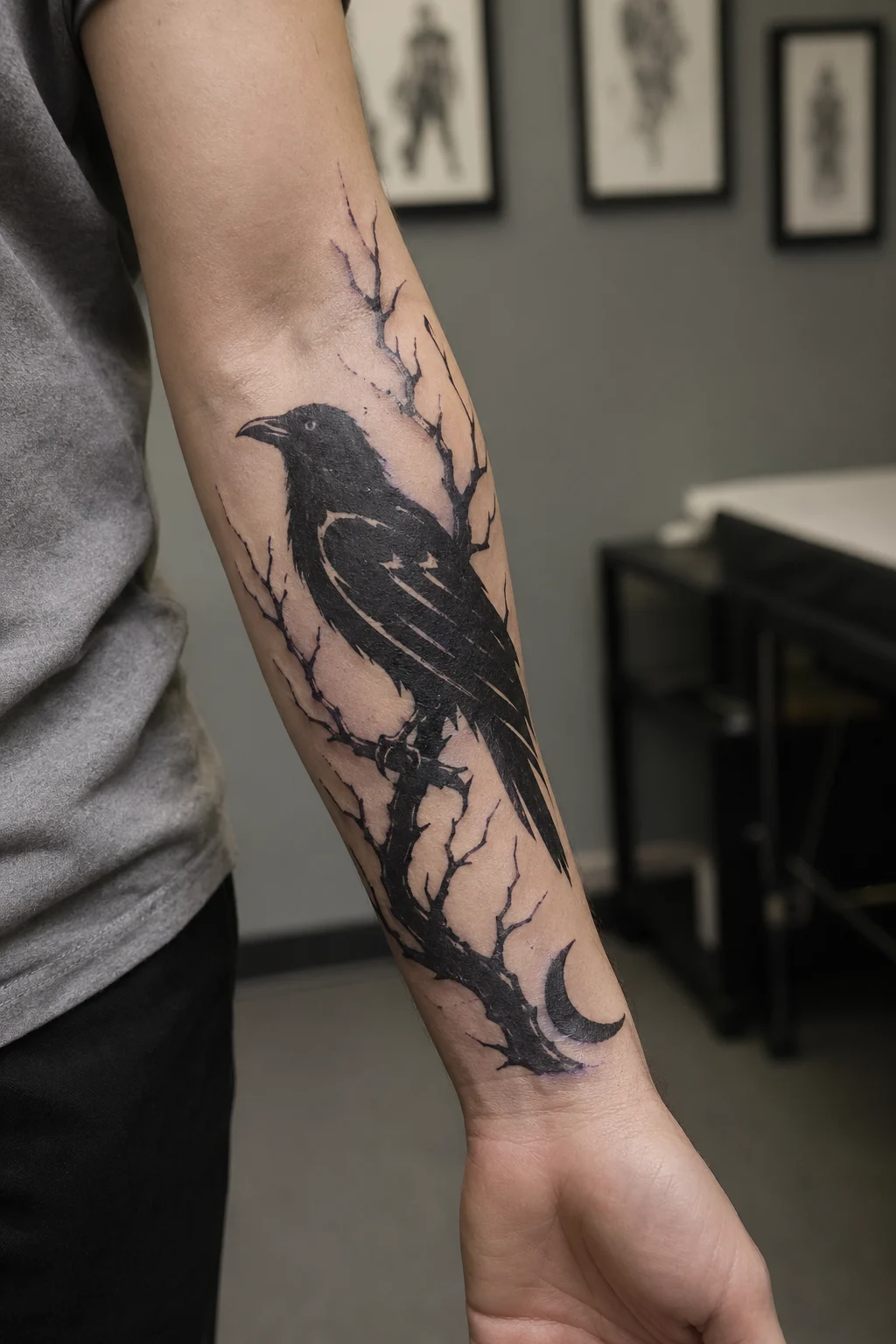
Scale is the quiet rule behind all of this. Small blackwork needs fewer parts. Large blackwork needs a stronger hierarchy. Full sleeves and blackout projects need an artist who can pack black evenly, manage swelling, and plan sessions so the final surface heals as one body of work.
Aging, Healing, And Saturation
Black ink has an advantage. It usually holds contrast better than pale color or tiny grey detail. That advantage disappears when the artist overpacks detail, chews the skin, or ignores the way ink softens over time.
Dense black areas also ask more from the healing process. Large fills can swell, peel, and itch in a more dramatic way than small linework. Follow your artist's instructions closely. The Cleveland Clinic's tattoo aftercare guidance stresses gentle washing, moisturizing, loose clothing, and avoiding picking or scratching while the tattoo heals. The American Academy of Dermatology also points out that UV light can fade tattoo ink, so healed blackwork still deserves sunscreen and shade.
Ask to see healed blackwork, not only fresh photos. Fresh black always looks impressive. Healed black tells you whether the artist can saturate cleanly, leave skin breaks open, and keep edges from turning fuzzy.
Where Blackwork Goes Wrong
The fastest way to ruin blackwork is to confuse darkness with strength. A design can be mostly black and still feel weak if the shape is lazy. It can be simple and feel powerful if the silhouette is disciplined.
Common failures show up fast:
- Thin negative-space cuts that close up after healing
- Too many small textures inside a dark field
- Sacred tribal patterning used as decoration without context
- Blackout coverage planned as one session when the skin needs pacing
- Tiny blackwork squeezed onto fingers, ribs, or wrists with no room to breathe
- Cover-up concepts that rely on mood instead of real coverage logic
For cover-ups, talk to a specialist. Old ink, scar tissue, skin tone, and pigment depth all matter. AI can help you explore direction, but a cover-up artist has to decide what is physically possible.
Designing A Blackwork Tattoo With OpenInk
Blackwork is one of the best styles to test in an AI tattoo generator because the rules are visible. You can ask for heavy fills, larger skin breaks, fewer interior lines, and a specific placement, then compare which draft still reads at a distance.
Start with a prompt like this:
"Blackwork moth tattoo for upper arm, bold outer silhouette, wings open in clean symmetry, interior wing pattern made from large negative-space cuts, black ink only, no grey shading, no tiny filigree, readable from across the room, tattoo flash style, enough open skin for healed clarity."
Then push the draft in one direction at a time:
- More negative space in the wings
- Thicker outer silhouette
- Fewer small interior marks
- Placement preview on outer forearm
- More botanical shape, less ornamental texture
For prompt structure, pair this article with our ChatGPT Images 2.0 tattoo prompt guide. When you have a clear direction, bring it into OpenInk's AI tattoo generator and test blackwork as a design system: subject, placement, scale, saturation, and skin breaks working together.
Blackwork is unforgiving in the best way. It rewards commitment, strong taste, and an artist who understands that empty skin can speak as loudly as ink.
Frequently asked
Do blackwork tattoos age well?
Better than pale color or tiny grey detail, because black holds its contrast longest. That advantage disappears when an artist overpacks detail, chews the skin, or ignores the way ink softens over time. Ask to see healed blackwork rather than fresh photos, since fresh black always looks impressive and only healed black tells you whether someone can saturate cleanly and keep edges from going fuzzy.
Can blackwork cover up an old tattoo?
Often yes, because heavy black and dense fill are among the few things that genuinely hide what came before. What is actually possible depends on the old ink, scar tissue, skin tone, and pigment depth, so this is a conversation for a cover-up specialist rather than something to settle on your own. Blackout coverage also needs pacing across sessions instead of one long sitting.
What is negative space in a blackwork tattoo?
The bare skin left uninked, doing part of the drawing: wing veins cut out of black fill, leaf edges carved from a solid field, a snake body shaped by open ribbons instead of tiny scales. Those gaps are what keep the piece readable once it heals. Cut them too thin and they close up, which is the most common way a blackwork draft fails.
Is blackwork the same as tribal tattooing?
No. Blackwork is a broad modern category covering blackout sleeves, geometric panels, ornamental symmetry, botanical silhouettes, and dark illustrative work. Polynesian and Maori patterning carries rank, identity, and ritual meaning inside a specific culture, and a blackwork piece can be graphic, abstract, or deeply personal without borrowing sacred patterns that belong to someone else.
Turn this guide into a tattoo draft
Keep the motif from this article, then test style, placement, and line weight before you talk with an artist.