Blackwork Tattoo Ideas
Blackwork Tattoo Guide

Blackwork Tattoo Ideas

Plan a blackwork tattoo with stronger contrast, cleaner negative space, placement scale, and an AI-ready brief before your studio consult.

What makes blackwork tattooing work

Blackwork looks direct because the palette is simple, but the planning is not simple. Solid black, open skin, dotwork, ornamental geometry, botanical silhouettes, and animal talismans all need enough scale and breathing room so the tattoo stays bold after healing.

Saturated black: packed ink, clear edges, and enough scale for large filled areas
Negative space: skin gaps used as drawing lines, not empty leftover space
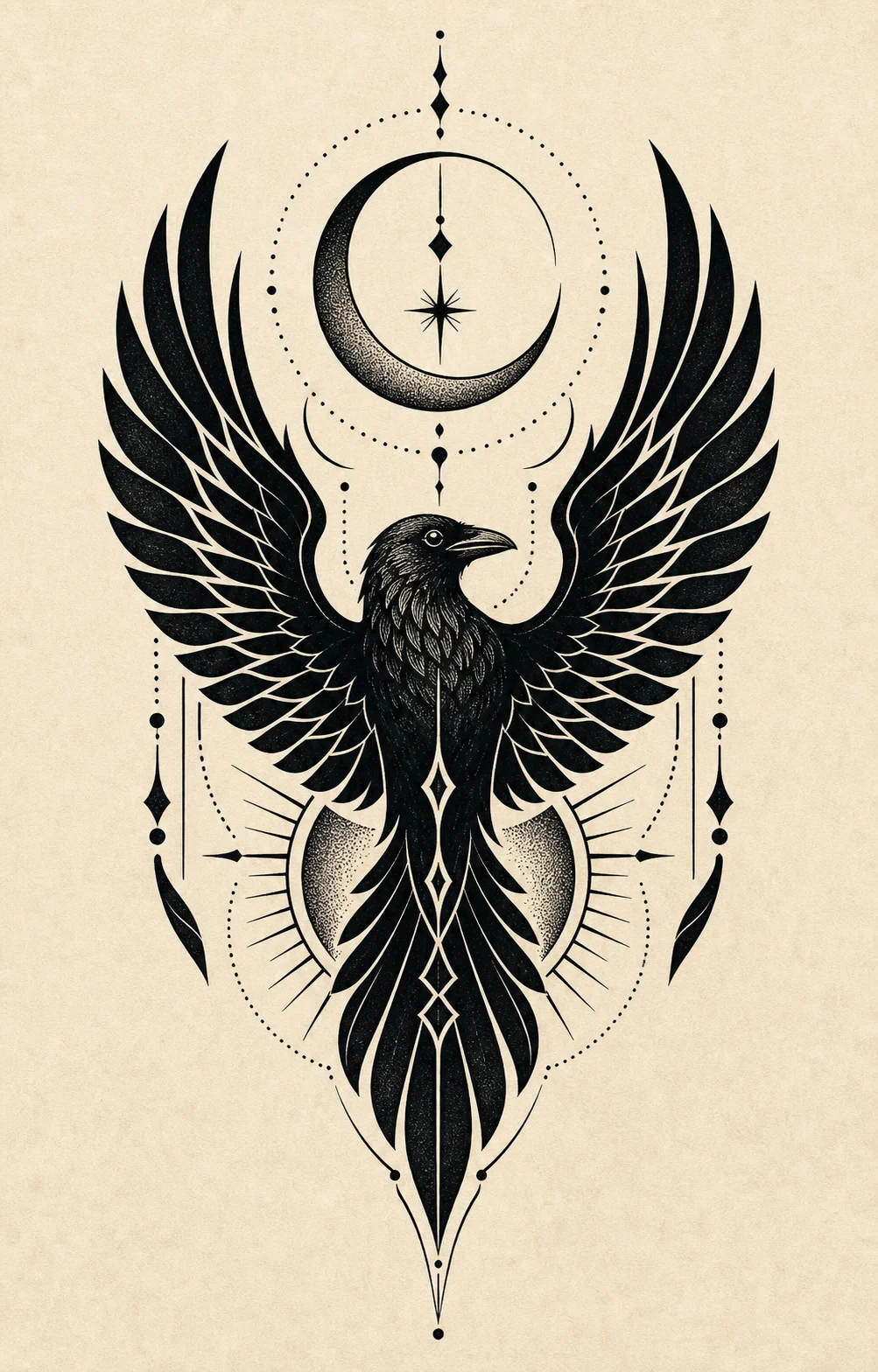
Graphic motifs: mandalas, bands, botanical silhouettes, ravens, snakes, moons, and abstract flow
Placement discipline: sleeves, forearms, calves, sternum, chest, and back pieces need different density
Negative-space sleeve flow Blackwork
Starter Promptblackwork tattoo style, saturated black ink, carved negative space, bold ornamental composition, clean readable silhouette

Use this as a base, then add motif, placement, palette, and background details.

Contrast And Placement Breakdown

Blackwork depends on committed black, planned skin breaks, and body-aware flow

A strong blackwork tattoo starts by deciding where the black carries the design and where bare skin needs to stay open. Use these directions to turn a bold reference into a tattoo brief that still has structure, rhythm, and long-term readability.

Negative-space sleeve flow Blackwork
01

Negative-space sleeve flow

blackoutskin breaksflow

Best when the tattoo needs a strong body line without becoming one flat black block.

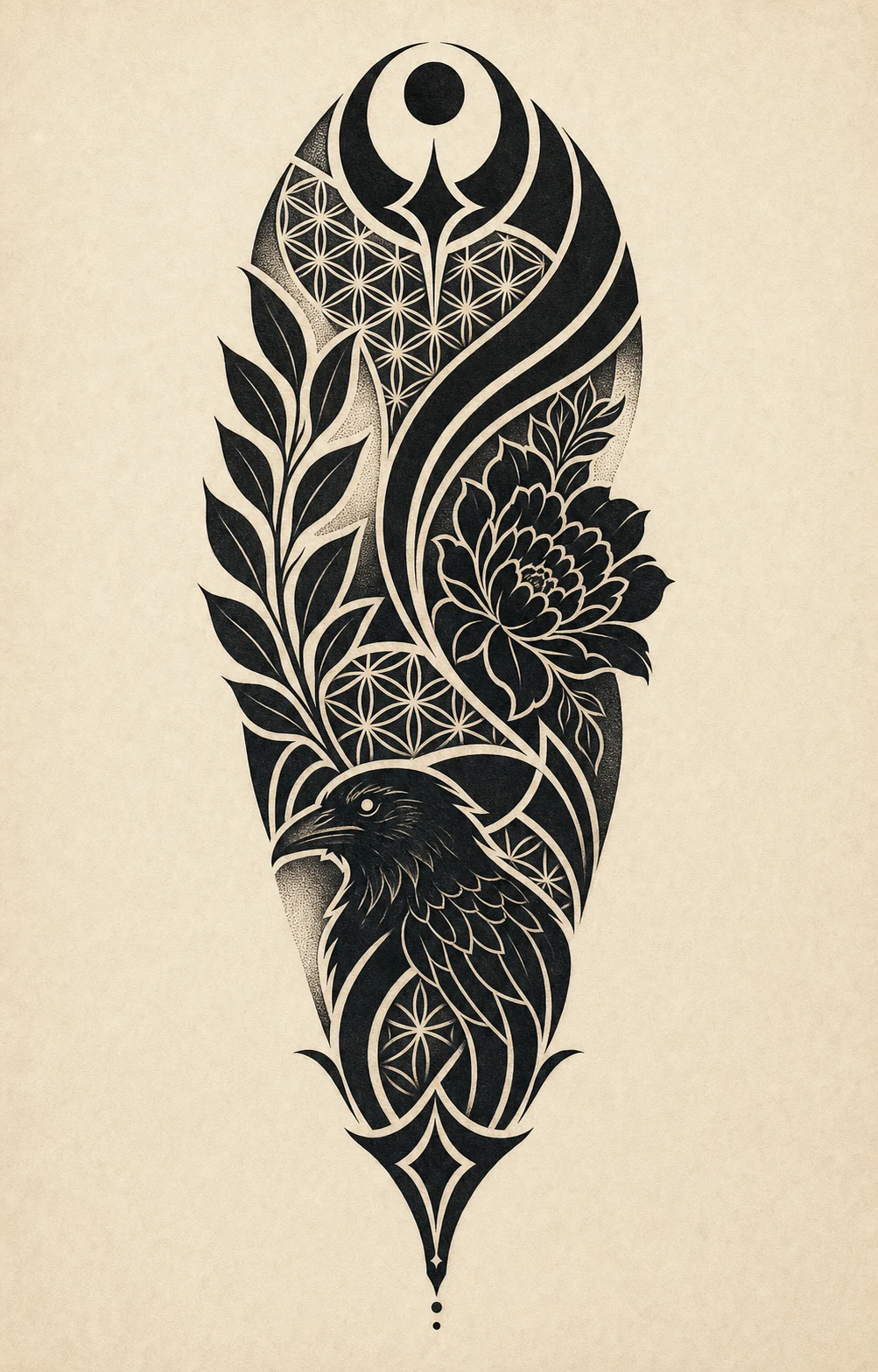
Blackout bands, curved panels, and carved skin gaps can make a sleeve or forearm piece feel architectural. The goal is not to fill everything; it is to let the black and the empty skin draw together.

Best fit

Best for forearms, upper arms, calves, shoulder caps, and sleeve sections with enough length for a clear rhythm.

Design note

Keep the skin breaks wide enough to heal cleanly. Thin white channels can look sharp on a draft and close visually once the tattoo settles.
Ornamental geometry and mandalas Blackwork
02

Ornamental geometry and mandalas

mandalasymmetrydotwork

Useful when you want ritual structure, centered balance, and high contrast without color.

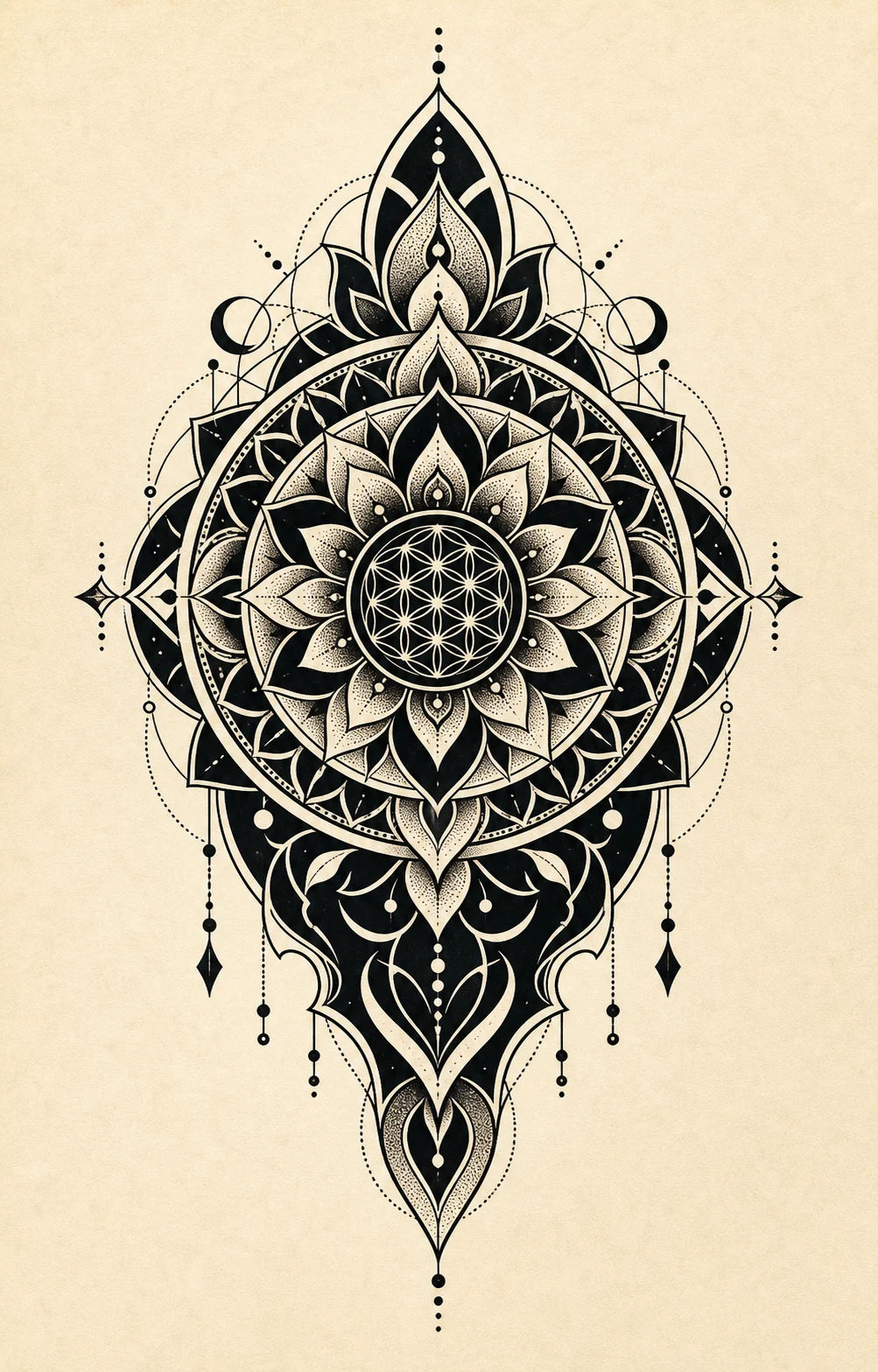
Mandalas, sacred geometry, line grids, and dotwork fields give blackwork a precise frame. These designs need clean spacing, a steady center, and enough size for the small repeating parts to stay readable.

Best fit

Best for sternum, chest, upper back, shoulders, forearms, calves, and larger flat areas.

Design note

Choose one main geometry system. Mixing too many grids, petals, dots, and ornaments can make the piece feel busy before it even reaches skin.

Botanical silhouettes Blackwork
03

Botanical silhouettes

floralleafnegative space

A softer direction that still keeps the weight and confidence of blackwork.

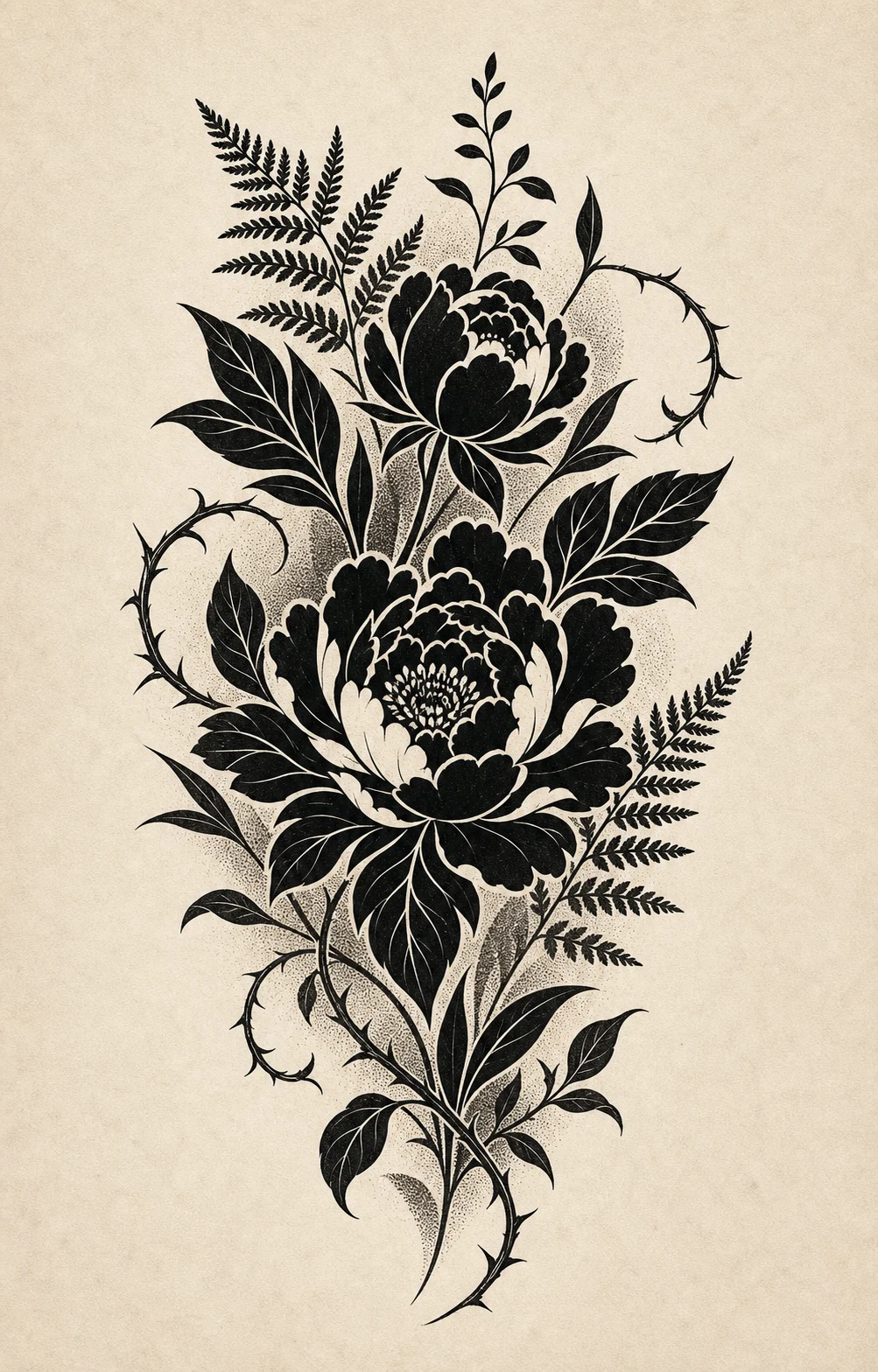
Peonies, ferns, thorned vines, leaves, and dark bouquets work well when their veins and petals are cut from negative space. The result can feel elegant without losing the heavy black identity.

Best fit

Best for forearms, ribs, hips, thighs, shoulders, calves, and vertical placements that benefit from a natural curve.

Design note

Let one flower or leaf group lead the composition. Too many small leaves can turn a strong silhouette into visual noise.

Animal talismans and dark symbols Blackwork
04

Animal talismans and dark symbols

ravenmoontalisman

Strong for clients who want blackwork with symbolism, protection, or a more gothic mood.

Ravens, snakes, wolves, moths, moons, eyes, and talisman shapes can hold a blackwork piece together when the silhouette is simple and the internal cuts are controlled.

Best fit

Best for upper arms, calves, sternum, upper back, thighs, and placements where the emblem can stay centered.

Design note

Keep the animal silhouette readable first. Add moons, dots, or ornaments only after the main shape still reads from a few steps away.

Use AI to test blackwork weight before the stencil stage

01

"Compare blackout flow, ornamental geometry, botanical silhouettes, and animal talismans before choosing the strongest blackwork direction."

02

"Preview how much negative space the design needs on forearm, sleeve, calf, sternum, chest, or back placements."

03

"Turn a heavy visual reference into a cleaner studio brief with scale, black saturation, skin gaps, and detail limits included."

Styles

Blackwork tattoo planning: black saturation, negative space, and scale

Blackwork tattoo searches often start with a bold image: a dark sleeve, a mandala, a raven, a snake, a botanical silhouette, or a heavy geometric band. In the studio, the decision becomes more practical. The artist has to judge how much black the skin can carry, where the negative space should remain open, and whether the smallest details will still read after healing.

Think of blackwork as contrast design. The strongest pieces are not simply darker; they have a clear hierarchy between packed black, open skin, dotwork texture, and the body line. A useful early draft should show where the tattoo breathes as clearly as where it hits hard.

Popular blackwork tattoo directions

01

Negative-space blackwork sleeve

Blackout panels and carved skin breaks can make a sleeve feel strong without turning every section into one solid field.

02

Blackwork mandala or ornamental tattoo

Symmetry, dotwork, and repeated shapes work well when the design has enough size and one clear center.

03

Blackwork botanical tattoo

Flowers, ferns, vines, and leaves can feel elegant when the veins and petals are drawn through negative space.

04

Blackwork raven, snake, moon, or talisman

A simple animal or symbol silhouette can carry a darker mood while staying readable from a distance.

Blackwork tattoo FAQ

Large packed black areas can feel intense because the artist may need to work the same zone carefully for saturation. Pain still depends on placement, size, skin, session length, and the artist's technique.
They often age well when the shapes are large enough and the negative-space gaps are not too thin. Tiny details inside heavy black areas need extra planning so they do not visually close up after healing.
Forearms, upper arms, calves, thighs, chest, sternum, shoulders, and back pieces work well because they give the black areas and skin breaks enough room to breathe.
Name the subject, placement, black density, negative-space style, and details to avoid. A useful prompt can specify a blackwork raven and crescent moon for upper arm, saturated black shapes, carved feather gaps, dotwork halo, no color and no text.

Start with a blackwork draft that keeps the black heavy and the gaps clean

Blackwork Tattoo Ideas, Designs & AI Generator | OpenInk