Geometric Tattoo Ideas
Geometric Tattoo Guide

Geometric Tattoo Ideas

Plan a geometric tattoo with sacred geometry, mandala balance, precise linework, negative space, and an AI-ready studio brief before your consult.

What makes a geometric tattoo work

Geometric tattoos need more than clean shapes. The best pieces respect symmetry, body flow, healed line spacing, and the way repeated forms sit on skin. Use this guide to turn geometric tattoo ideas into a clearer brief for mandalas, animals, ornaments, abstract sleeves, and placement studies.

Sacred geometry: flower of life, metatron cube, hexagons, circles, triangles, and measured grids
Precision linework: clean spacing, consistent weight, stable centers, and readable repetition
Placement planning: forearm bands, sternum pieces, spine lines, shoulder caps, calves, and sleeves
Studio clarity: AI prompts and artist notes that separate symmetry, scale, negative space, and detail limits
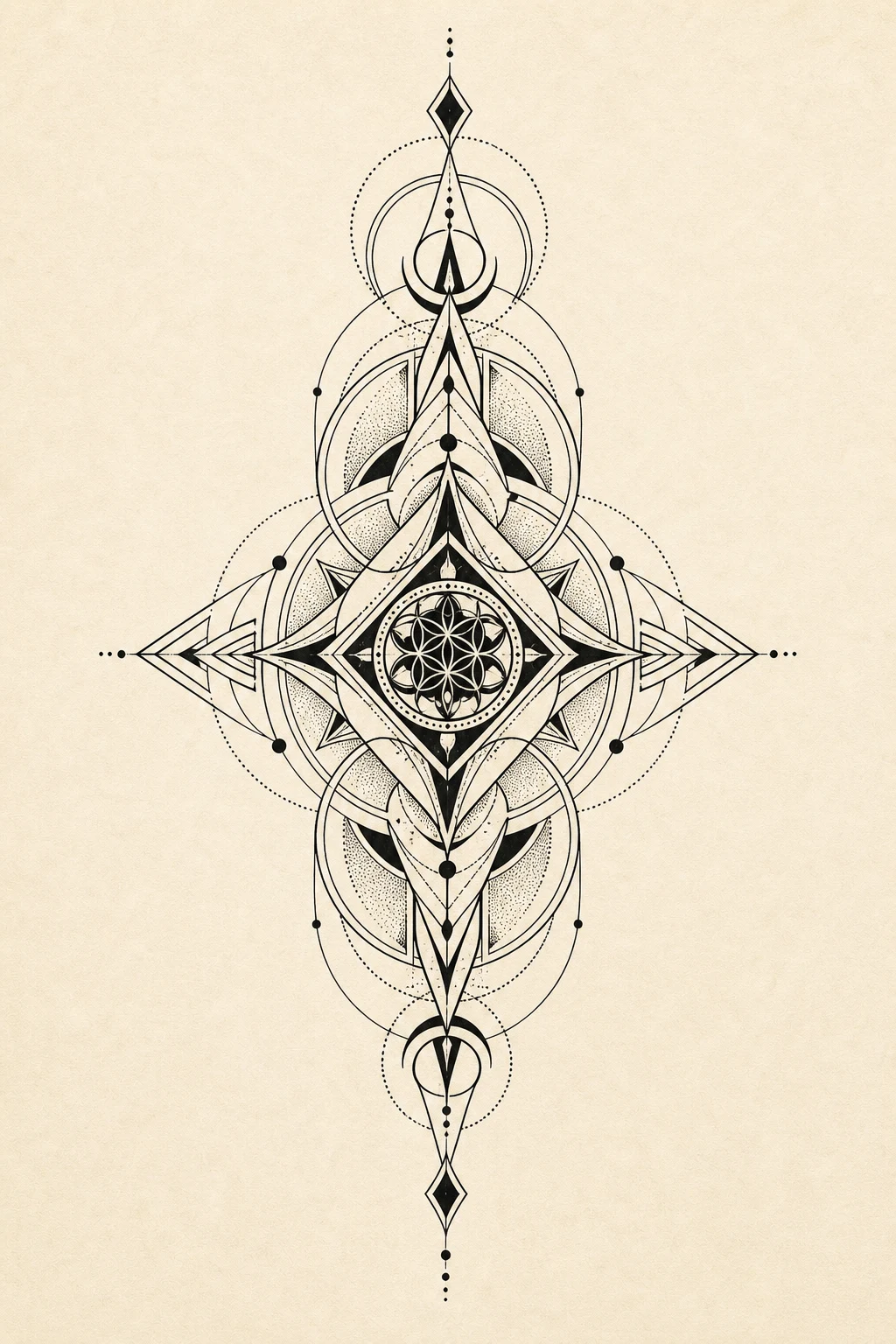
Sacred geometry and mandala tattoos Geometric
Starter Promptgeometric tattoo style, precise lines and shapes, symmetry, clean sacred-geometry inspired

Use this as a base, then add motif, placement, palette, and background details.

Motif And Placement Direction

Geometric tattoo ideas become stronger when the pattern follows the body

A strong geometric tattoo is not just a perfect diagram. It chooses a clear center, gives repeated lines enough room to heal, and uses negative space so symmetry feels intentional instead of crowded.

Sacred geometry and mandala tattoos Geometric
01

Sacred geometry and mandala tattoos

mandalasacred geometrycentered

Best for clients who want balance, symbolism, and a precise focal point.

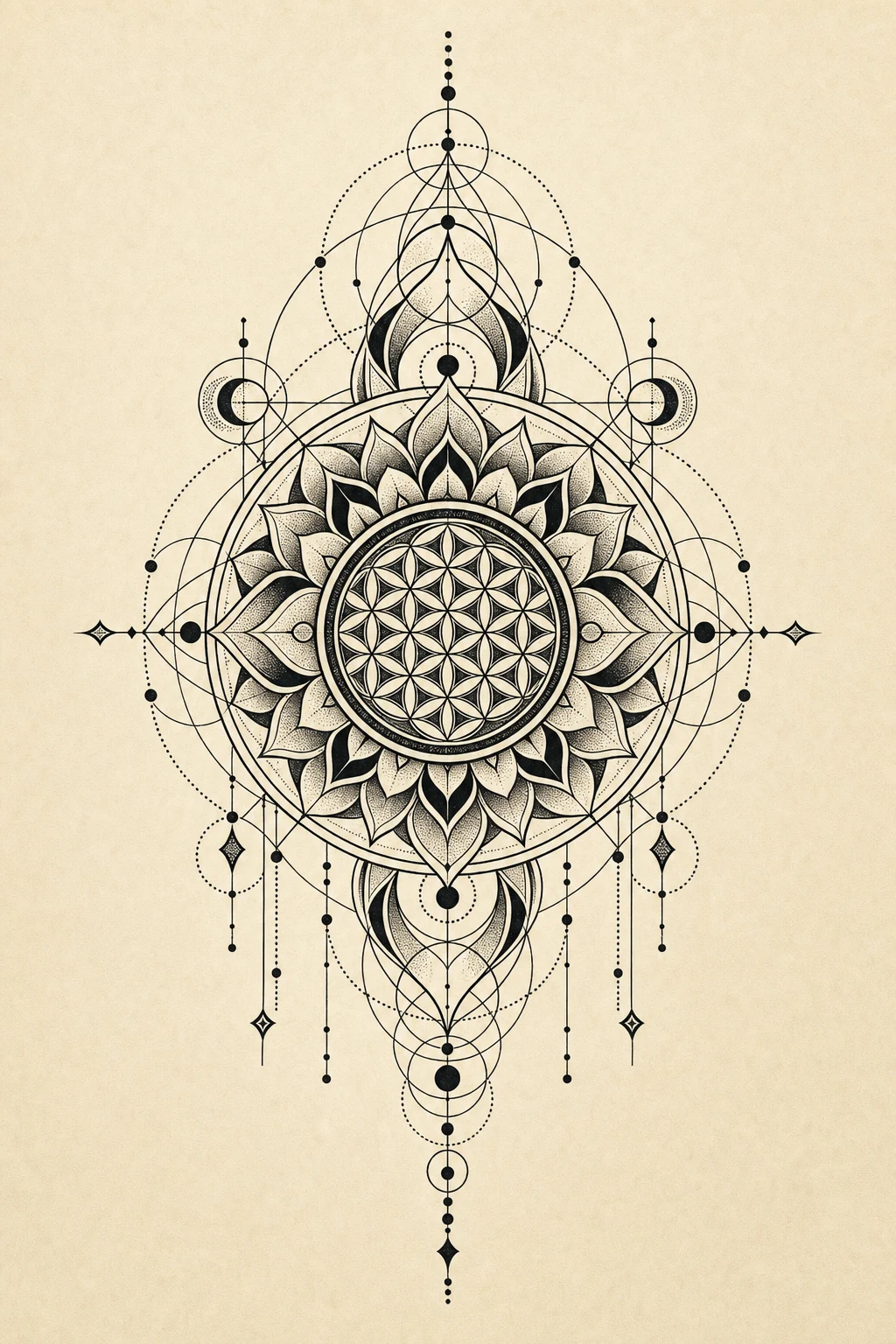
Mandalas, flower of life grids, metatron cube layouts, and layered circles work when the center is stable and every ring has enough air. The design should still read from a few steps away before tiny dotwork or micro-lines are added.

Best fit

Best for sternum, upper back, shoulder caps, knees, elbows, forearms, and calf centers.

Design note

Keep the core geometry larger than the reference image suggests. Tiny rings and repeated petals can merge after healing, so let negative space carry part of the pattern.
Geometric animals Geometric
02

Geometric animals

wolflionowl

A strong route when the tattoo needs symbolism but still has a readable silhouette.

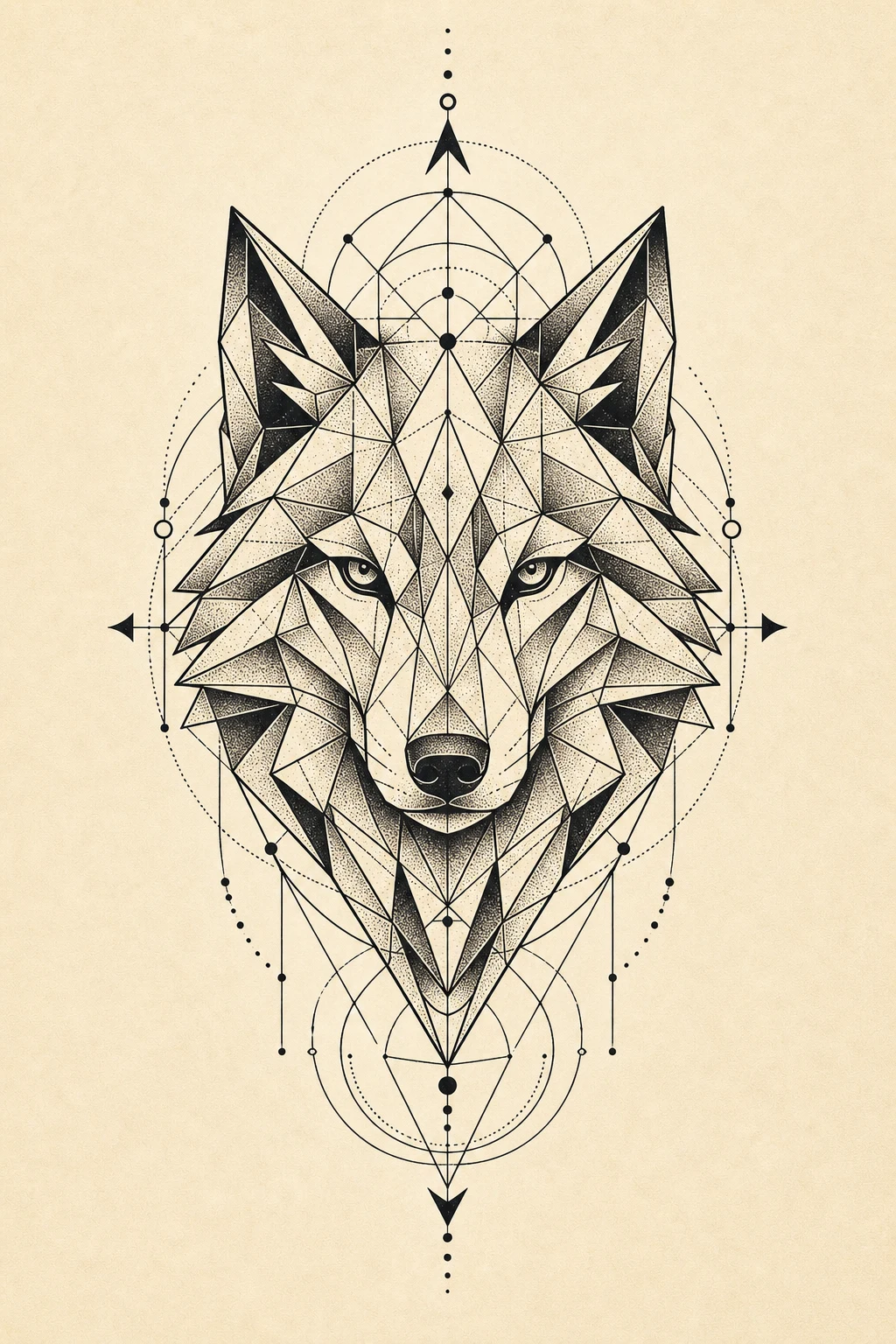
Wolves, lions, owls, snakes, butterflies, and koi can hold geometric structure when the outer shape stays simple. Faceted planes, triangle cuts, and dotwork shadows should support the animal instead of breaking its expression.

Best fit

Best for outer forearms, upper arms, thighs, calves, chest panels, and shoulder blades.

Design note

Start with the animal silhouette, then add geometry. If the eye, head angle, or body curve disappears, the pattern is doing too much.

Ornamental symmetry Geometric
03

Ornamental symmetry

ornamentaljewelrybalance

Good for elegant tattoos that need structure, rhythm, and a crafted decorative feel.

Ornamental geometry uses mirrored lines, drops, arches, filigree, beads, and small mandala fragments. It works best when the vertical axis or wrap direction is planned before the details are drawn.

Best fit

Best for sternum, spine, underboob, collarbone, wrist cuffs, ankle bands, and upper back placements.

Design note

Use one main axis and a few supporting accents. Too many small ornaments can make the tattoo feel like lace without a clear focal point.

Abstract body-flow geometry Geometric
04

Abstract body-flow geometry

abstractflownegative space

Useful for sleeves and larger placements where geometry should move with the body.

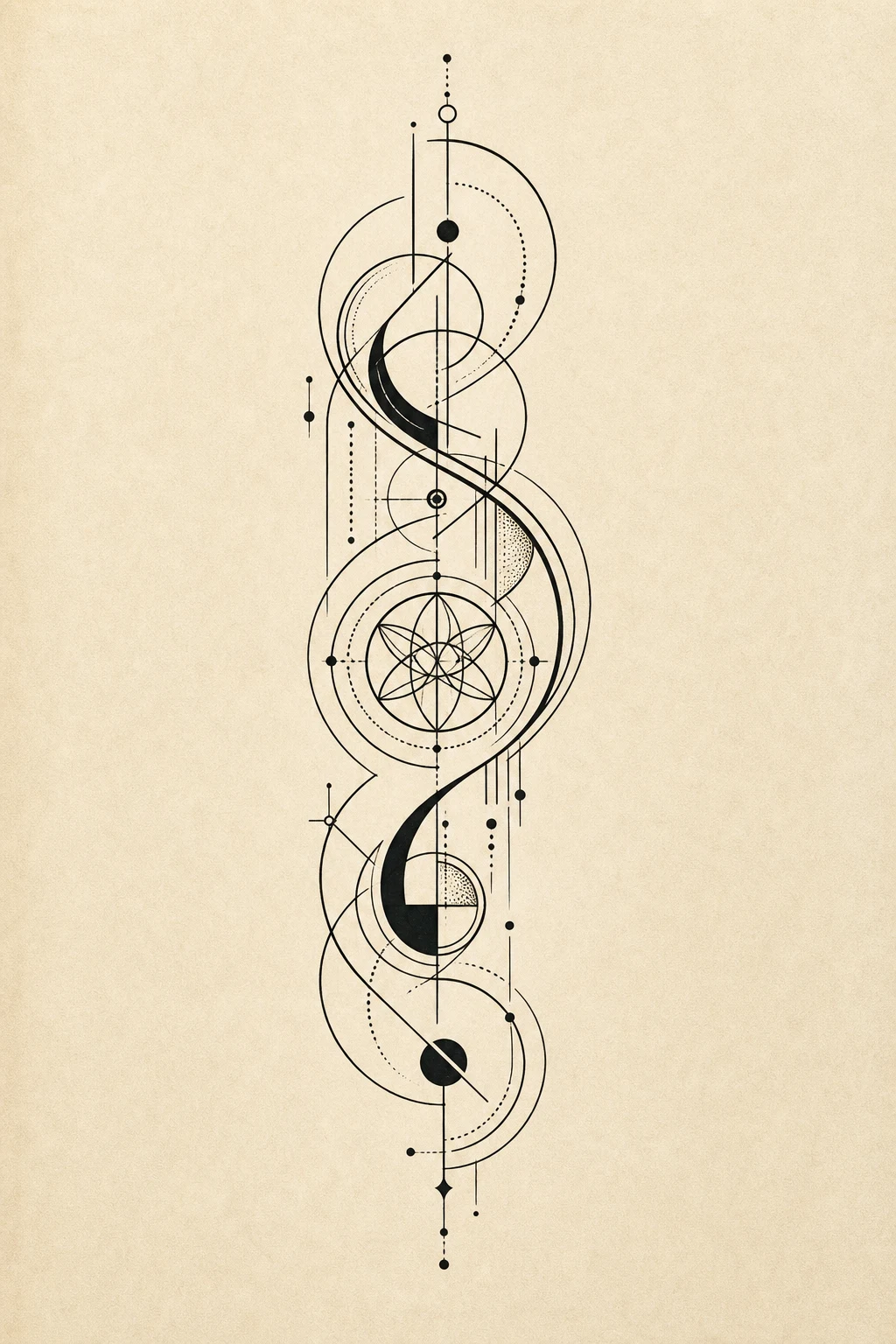
Abstract geometric tattoos can use arcs, broken grids, black planes, dot fields, and open skin to follow muscle and bone. The strongest versions have a clear direction instead of filling every space with pattern.

Best fit

Best for half sleeves, full sleeves, ribs, hip-to-thigh pieces, backs, calves, and wraparound forearms.

Design note

Map the body line first. Let large shapes lead and keep some skin open so the design has rhythm when the arm or leg moves.

Use AI to turn geometric references into a studio-ready brief

01

"Compare sacred geometry, mandala, animal, ornamental, and abstract body-flow directions before choosing a composition."

02

"Test line weight, dotwork density, center alignment, and negative space so the pattern stays readable on skin."

03

"Build a studio brief with motif, placement, symmetry rules, scale, detail limits, and what the artist should simplify."

Styles

Geometric tattoo planning for symmetry, placement, and healed linework

Most geometric tattoo searches begin with a clean reference: a mandala, a wolf made from triangles, a flower of life grid, or an abstract sleeve. The studio decision is more practical. The artist needs to know where the center sits, how the pattern wraps, and which details need more room to heal cleanly.

Think of geometric tattoo design as a system of line weight, spacing, repetition, and skin breaks. A good early draft should show both the mathematical idea and the tattoo logic, especially when the piece includes sacred geometry, dotwork, or a large body-flow composition.

Popular geometric tattoo directions

01

Sacred geometry mandala tattoo

Use a stable center, larger rings, dotwork restraint, and enough negative space for a balanced mandala or flower of life design.

02

Geometric animal tattoo

Keep the animal silhouette readable first, then add facets, triangle cuts, line grids, or dotwork shadows around it.

03

Ornamental symmetry tattoo

Plan mirrored jewelry-like forms around a clear axis for sternum, spine, collarbone, wrist, or ankle placements.

04

Abstract geometric sleeve

Use arcs, black planes, open skin, and broken grids to create movement across the arm, leg, ribs, or back.

Geometric tattoo FAQ

Forearms, upper arms, sternum, spine, shoulders, calves, thighs, and backs all work well. The right choice depends on whether the design needs a stable center, a wraparound band, or a long body-flow composition.
Precise geometry needs enough scale and spacing. Very small repeated lines, tiny rings, and dense dot fields may soften together after healing, so the artist may simplify the pattern for longevity.
Sacred geometry often uses symbolic grids such as the flower of life, cubes, triangles, and circles. Mandalas focus on a centered radial structure. Many strong tattoo briefs combine both, but the layout should still have one clear hierarchy.
Name the motif, placement, symmetry type, line weight, negative-space level, dotwork density, and what to avoid. A useful prompt can specify a geometric mandala forearm tattoo, sacred geometry center, crisp black linework, open skin gaps, no tiny text.

Start with a geometric tattoo draft that respects symmetry and skin

Geometric Tattoo Ideas, Designs & AI Generator | OpenInk