Fine Line Tattoos: Do They Age Well, Aftercare, and Design Ideas (2026)
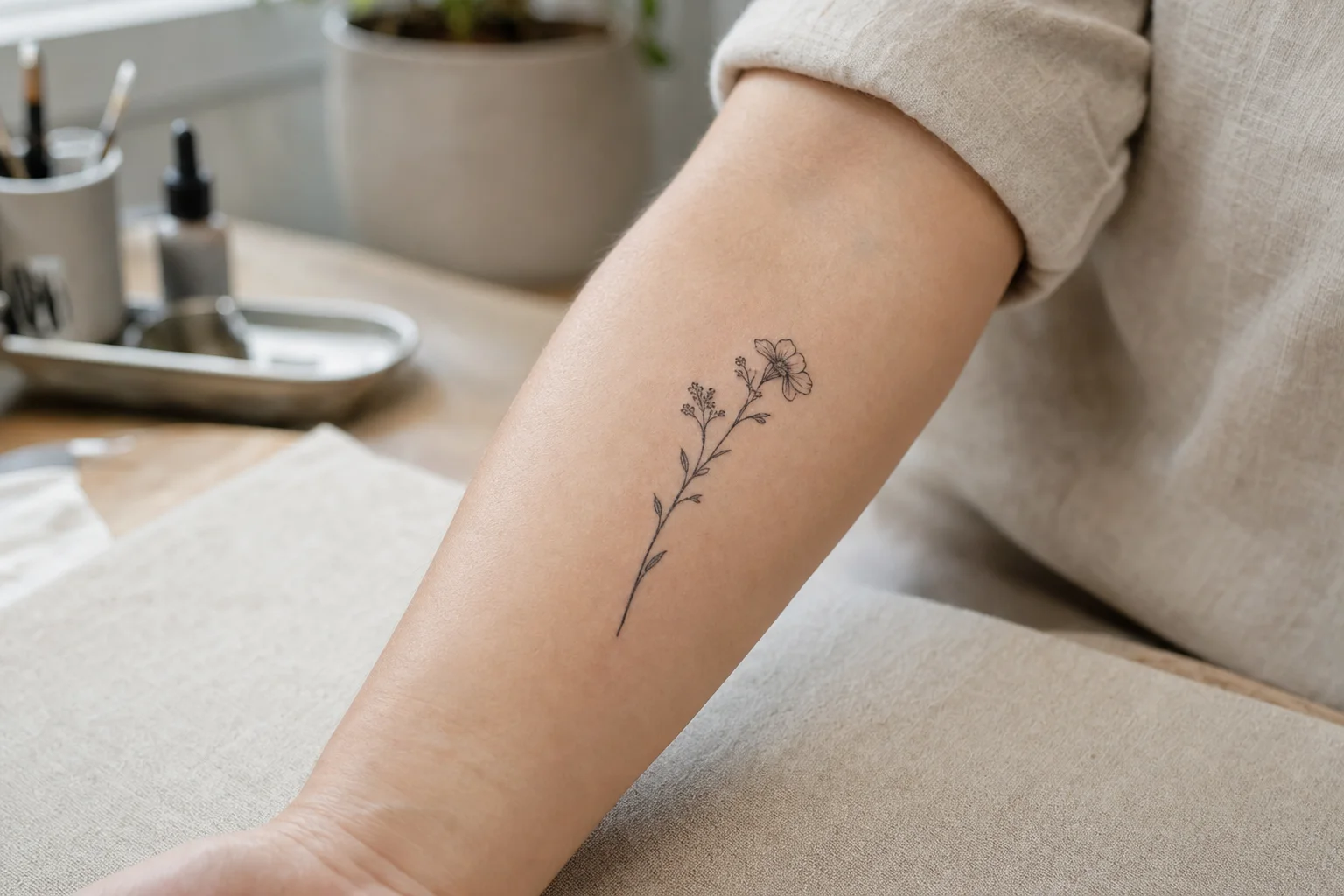
A fine line tattoo is thin, hair-width linework laid with a single needle or a tight liner, usually in black, usually small. It looks delicate because it is. And the question everyone asks first is whether it lasts: yes, if the artist places the ink right and you keep it out of the sun, but a fine line piece will not stay crisp forever the way a chunky old-school tattoo does. Plan on a light touch-up somewhere between years four and eight.
A strong fine line piece reads clean from a few feet away and still holds its shape after a decade of skin.
Do Fine Line Tattoos Really Fade?
Short answer: all tattoos move and soften over the years, and fine line shows it sooner than bold work because there is simply less ink in the skin.
Two different things happen, and people mix them up. The first is ink drift. Every tattoo, bold or fine, spreads a little under the skin over time as your immune system keeps working on the pigment particles. That is biology, not a botched line. The second is real fading, where the line genuinely loses density. That one is usually caused by ink placed too shallow, or by sun, not by the fine line style itself.
Here is the honest range nobody likes to print: a fine line tattoo holds up roughly 1 to 10 years depending on placement, how deep the ink sits, your skin, and your aftercare. That is a wide spread on purpose. A wrist script baking in the sun unprotected is a different animal from a small sternum floral that lives under a shirt.
Black ink lasts longest. Light and pastel colors fade fastest, which is exactly why most durable fine line work is plain black. If someone sells you a tiny pale-blue fine line piece on a finger and promises it stays sharp, they are overselling.
Use this rough placement-longevity map as a gut check:
- Best (holds clean for years): inner forearm, outer thigh, upper back, calf
- Middle (good with sun discipline): ribs, sternum, upper arm, shoulder
- Rough (expect drift and touch-ups): wrist, ankle, behind the ear
- Worst (often gone or blurred fast): fingers, hands, feet, palms
Plenty of well-cared-for fine line pieces still read clearly after ten years. They also usually got a quiet refresh somewhere in the middle. That is normal maintenance, not failure.
What Fine Line Means Now
Fine line is defined by how it is made, not by what it shows. The Tattoodo fine line style guide frames it around thin, hair-like linework laid with round liner needles or a single needle, rather than around any one subject. That is why it covers so much ground. The style splits into a few recognizable lanes:
- Illustrative / botanical: single-stem flowers, leaves, herbs, trailing vines in ultra-thin line with little heavy shading. The most-requested fine line work by a mile.
- Micro-realism: tiny portraits, eyes, pets, small objects rendered with real shading and light on a small scale
- Single-line / minimalist: one continuous unbroken line forming a face, flower, or figure
- Micro-script / micro-lettering: short phrases, dates, names in refined custom-handwriting fonts
Botanical is the gateway and the bestseller. Micro-realism is the hardest to pull off well at that size. Single-line is the most fragile, since one wobble ruins the whole effect.
Line Weight Is The Whole Craft
The entire style hangs on one thing: a clean, even thin line in a single confident pass.
That is harder than it sounds. With so little ink going in, there is no margin. A shaky pass, a misjudged depth, an uneven hand, and it shows immediately. Bold work hides small mistakes under saturation. Fine line hides nothing. This is the style where the artist's technical skill is most exposed.
A quick word on needles, because the marketing gets confusing.
| Needle | What it is | Ink flow and control | Line it actually lays |
|---|---|---|---|
| 1RL, sold as "single needle" | One ultra-fine needle | Least of both | The thinnest possible stroke |
| 3RL | Three tight liners grouped together | A bit more of both | A line just as thin, in a steady hand |
That last column is the part artists rarely say out loud: a well-handled 3RL can lay a line just as thin as a 1RL, and to your eye the difference usually is not noticeable. Needle choice is mostly artist preference, not a quality grade. Do not pay extra for "single needle" as if it is automatically finer.
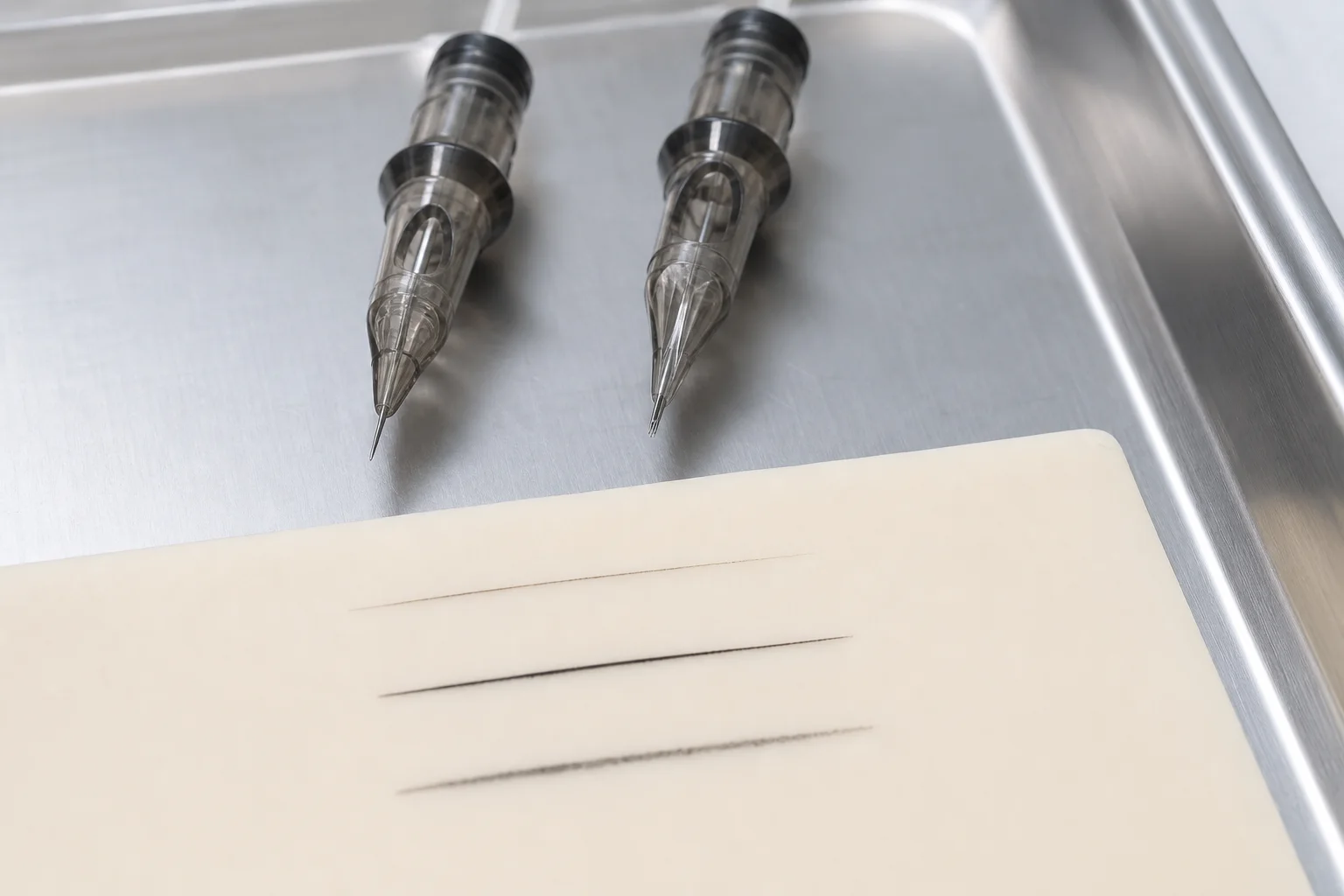
The trade-off built into thin single-pass lines: less skin trauma, so the work tends to heal faster than heavily packed bold pieces, but lower ink density, so it shows sun damage and drift sooner. You buy an easier heal and pay for it in longevity.
Placement Changes Survival
Where you put a fine line tattoo decides how long it survives, more than almost any other factor.
Two forces wreck thin lines: friction and thin skin. Hands, fingers, feet, and palms get rubbed and washed constantly and have skin that does not hold pigment well, which is why finger tattoos are famous for falling apart within a year or two. The inner forearm, outer thigh, upper back, and calf are the opposite: fleshier, lower friction, easier to keep covered, and they hold fine detail for years.
Bony, thin-skinned spots sit in the middle. Ribs, sternum, wrist, and ankle look great fresh and they sting more, but they also drift faster than a forearm. They can absolutely work. Just go in knowing a touch-up is more likely.
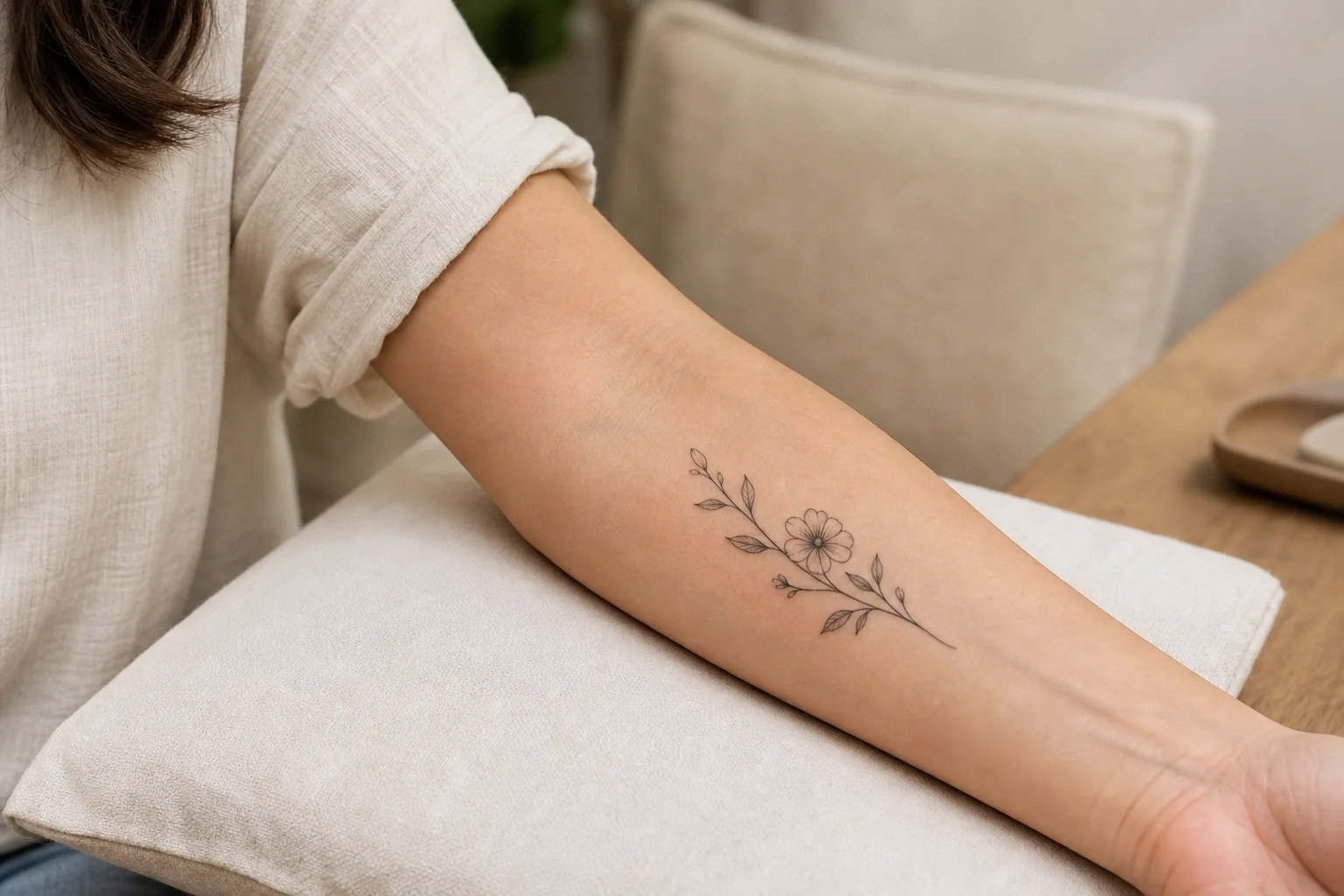
If you are between two spots, mock the design up on each before you book. A quick preview in the OpenInk generator shows the same piece on a forearm versus a wrist so you can see the scale change before a needle touches you.
Aftercare For Thin Lines
Keep it clean, keep it from drying out, and keep it out of the sun. That is most of the job.
Your new tattoo is an open wound for the first week or two. It will peel, flake, and itch like a healing sunburn. That is normal. Do not pick the scabs, and do not scratch, because on thin lines pulling a scab early can lift pigment and leave a gap you will have to fix later. Follow the Cleveland Clinic's tattoo aftercare guidance for the washing-and-moisturizing routine, including the part people skip: no sunscreen on unhealed skin, only once it has closed up.
Sun is the long game, and it is where fine line lives or dies. The American Academy of Dermatology says UV light fades tattoo ink, so once the piece is healed it wants broad-spectrum SPF 30 or higher, reapplied. A few unprotected summers will visibly fade low-density fine line work. This is not optional fussing. It is the single biggest thing in your control.
And it is a real gap, not nagging. A peer-reviewed survey in the Journal of Clinical and Aesthetic Dermatology found that while 84% of artists give aftercare instructions, only around 60% recommend sun protection and just 38% of studio websites mention long-term UV care. So you may not hear this from the shop. Hear it here.
One more thing before you book: ask to see healed fine line work, not fresh. Anyone can make a freshie look sharp. A healed photo from a year out tells you whether that artist's lines actually hold.
Pain And Cost, Honestly
Fine line is on the gentler end of the pain scale, which is part of why so many first tattoos are fine line.
A single or thin liner does less skin trauma than packing solid color, and the sessions are usually short. That said, placement still rules. Ribs, wrist, sternum, ankle, anywhere close to bone or over thin skin, those still sting no matter how thin the line. The fleshy spots are far easier to sit through.
On cost, most fine line artists charge by the hour. In 2025 established specialists commonly run $150 to $250 an hour, with the broader market anywhere from about $100 to $300 and up. Shop minimums usually land around $50 to $100, and small pieces often come in between $50 and $200. Budget a little extra for the touch-up most fine line work wants within four to eight years. That refresh is part of the real cost of the style.
2026 Fine Line Design Ideas
Fine line is the most-requested style going into 2026, and the demand skews toward a handful of subjects that suit thin linework.
- Botanical: single-stem florals, leaves, herbs, trailing vines. The default for a reason: organic shapes forgive a little drift.
- Constellation and celestial: small star maps, moons, simple celestial dots and lines
- Micro-symbol: tiny minimalist symbols and small geometric motifs
- Fine script: dates, names, and short meaningful phrases in custom handwriting
- Single-line: one continuous line forming a face, a flower, a body
This lines up with who is actually getting tattooed. Pew Research found that 56% of women ages 18 to 29 have at least one tattoo, and that group is the core fine line audience. If you want more in this lane, our 10 tattoo ideas for women and 15 small tattoos for first-timers guides cover it from the other angle.
One caution worth saying with the numbers: Pew also found 24% of tattooed Americans regret at least one piece. Fine line being trendy is not a reason to rush. It is permanent artwork you keep forever.
Where Fine Line Goes Wrong
Most fine line disasters come from the same short list:
- Lines drawn too fine to last: pushed thinner than skin can hold, so they thin out and vanish in a few years
- Wrong placement: fingers, hands, feet, where friction and thin skin chew up thin lines fast
- Blowout: ink pushed too deep into the fat below the dermis, or over-pressure, spreading a clean line into a fuzzy bruise-blur. Fine lines blow out more easily than bold ones precisely because they carry so little ink and have less margin.
- Illegible micro-detail: text or detail crammed so small it drifts into a smudge within a year
- The wrong artist: a general tattooer winging fine line. This style is unforgiving and specialized; book someone whose healed portfolio is full of it, not someone who does it sometimes.
Blowout, ink drift, and sun fade are three different problems with three different causes. Blowout is technique, ink too deep. Drift is biology, slow and partial. Fade is usually sun. Knowing which one you are looking at tells you whether a touch-up fixes it or whether you needed a different artist in the first place.
Designing A Fine Line Tattoo With OpenInk
Fine line is a great style to test in an AI generator because the things that make or break it are all visible upfront: line weight, scale, how much detail is realistic at that size, and how it sits on the body.
Start with a prompt like this:
"Delicate fine line botanical tattoo for the inner forearm, single black hair-thin linework, single-needle style, one stem of wildflowers, minimal shading, open negative space, no tiny illegible detail, sized to read clearly at arm's length, tattoo flash style, spaced for clean healing."
Then push the draft one change at a time:
- Thinner or slightly heavier line weight
- Less detail, more negative space
- A simpler single-line version
- Placement preview, forearm versus wrist
- Black only, no color
For prompt structure, pair this with our ChatGPT Images 2.0 tattoo prompt guide, and browse the fine line tattoo ideas gallery to see what actually holds up at small scale. When the direction is clear, bring it into the OpenInk AI tattoo generator and test the design at real size before you take it to an artist.
If you have got the idea down, message a fine line specialist with the reference, the placement, and a rough budget, and ask to see their healed work. Go from there.
Related Fine Line And Minimal Guides
- 15 Small Tattoos for First-Timers — where most fine line journeys actually start, with realistic first-tattoo expectations
- 10 Tattoo Ideas for Women — the minimalist and botanical lane that overlaps hard with fine line
- Dotwork Tattoo Guide — the precision-linework sibling, where stippling builds shape one dot at a time
Frequently asked
How long do fine line tattoos last before they need a touch-up?
Plan on a light touch-up somewhere between years four and eight. The honest range for how long a fine line piece stays crisp is 1 to 10 years, and where you land inside that spread depends on placement, how deep the ink sits, your skin, and how much sun the piece takes. A wrist script baking unprotected is a different animal from a sternum floral that lives under a shirt.
Are single-needle tattoos better than 3RL fine line work?
No. A well-handled 3RL lays a line just as thin as a 1RL, and to your eye the difference usually is not visible. The 3RL groups three tight liners, which gives more ink flow and more control across a long line. Needle choice is artist preference, not a quality grade, so do not pay extra for single needle as though it were automatically finer.
How much does a fine line tattoo cost?
Established fine line specialists commonly charge $150 to $250 an hour, with the wider market running roughly $100 to $300 and up. Shop minimums usually land around $50 to $100, and small pieces often come in between $50 and $200. Budget a little extra for the touch-up most fine line work wants within four to eight years.
Where should you not get a fine line tattoo?
Fingers, hands, feet, and palms. Constant friction, constant washing, and skin that holds pigment poorly are why finger tattoos are famous for falling apart within a year or two. Inner forearm, outer thigh, upper back, and calf are the opposite: fleshier, lower friction, easy to keep covered, and they hold thin linework for years.
Turn this guide into a tattoo draft
Keep the motif from this article, then test style, placement, and line weight before you talk with an artist.