Geometric Tattoo Guide: Sacred Geometry, Mandalas, and Lines That Hold
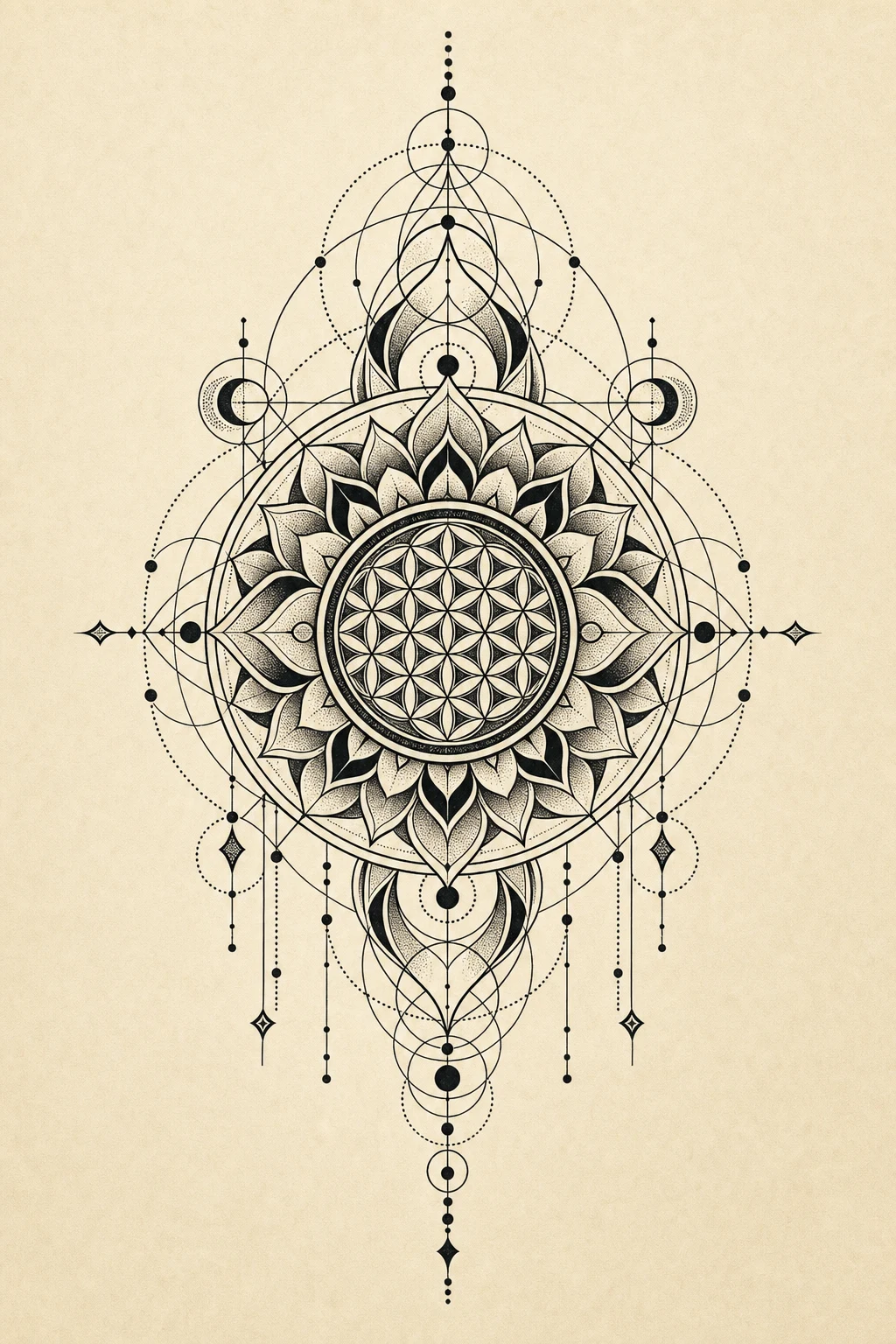
A geometric tattoo is a promise about precision, and the body has to keep that promise for decades. The math is easy. The skin is not. A circle that is perfect on paper is never perfect on a forearm that swells, ages, and moves for thirty years.
A strong geometric piece feels centered, breathing, and still readable from across the room.
What Geometric Tattooing Means Now
Geometric tattooing builds an image out of measurable parts: rings, lattices, repeated angles, mirrored halves. Tattoodo's geometric style guide frames it as work organized around symmetry, clean linework, and deliberate proportion rather than free illustration. That width is on purpose, since the style splits into a few recognizable lanes:
- Sacred geometry and mandalas — circles, the flower of life, Metatron's cube, symbols with a long bloodline
- Geometric animals — a wolf, stag, or fox built from facets and planes
- Ornamental symmetry — jewelry-like patterning organized around a single axis
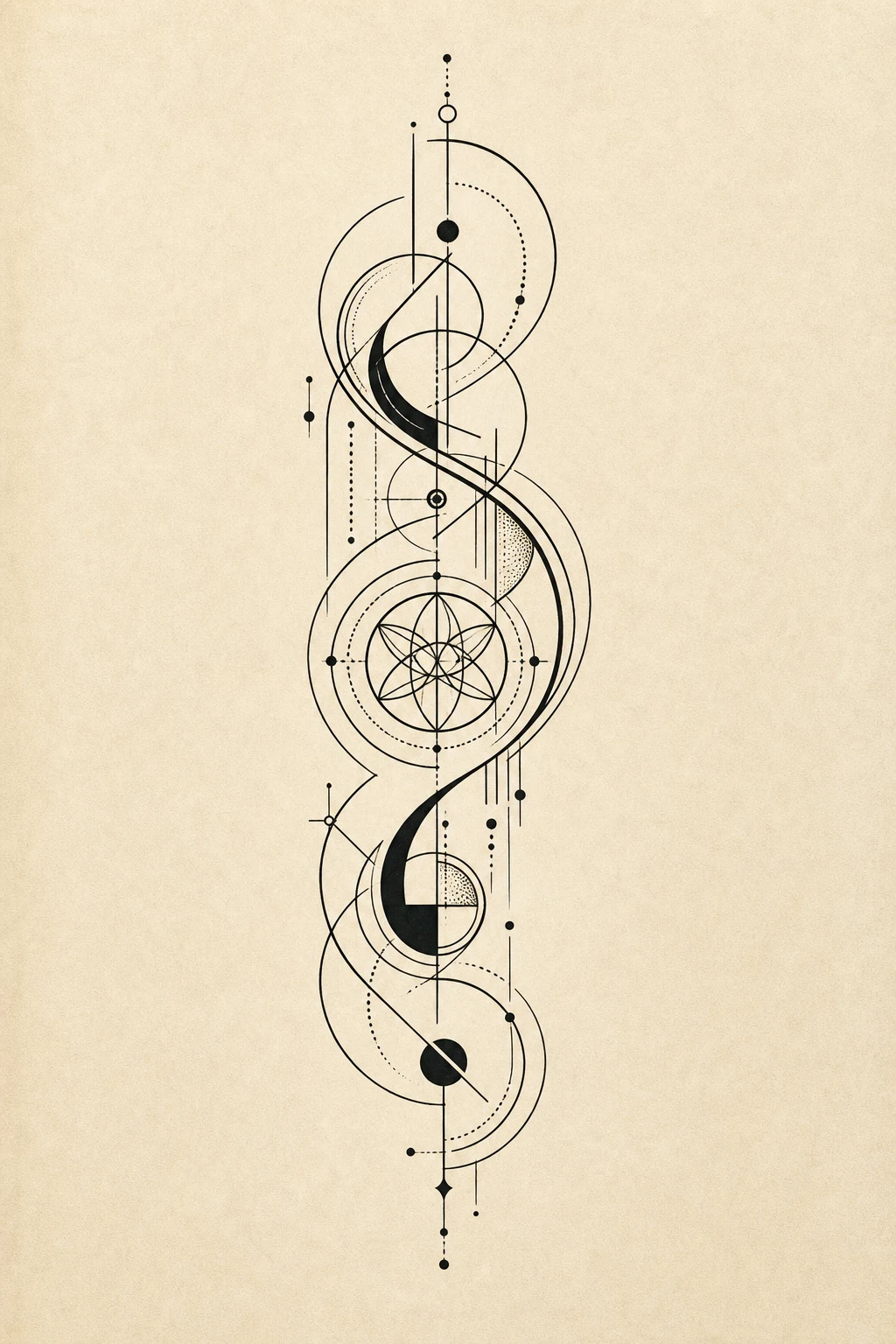
- Abstract body-flow — lines drawn to wrap a limb rather than to mean anything specific
The sacred-geometry lane carries the most lineage of the four, and it is worth naming before you wear it.
A Stable Center Does The Real Work
Geometric lives or dies on one variable: a true, stable center with consistent line spacing radiating out from it.
Everything else is downstream. A crooked center is the killer nobody catches in the stencil and everybody sees forever. Rings drawn too small to heal close up into a smudge within a year. Lines packed too tight spread under the skin and bleed into each other until the pattern reads as a grey blur instead of a grid.
The fix is unglamorous: a center ring drawn slightly larger than the reference, plus generous spacing, is what decides whether a mandala still reads at arm's length once it heals.
Use the squint test. Step back from the design until the small inner rings disappear. If the core symmetry still reads as a clean shape, the piece has bones. If it collapses into a dark disc, it needs fewer rings, bigger gaps, and a stronger axis before a needle goes near it.
A Short, Honest Word On Sacred Geometry
Decorative sacred geometry and living sacred tradition are not the same thing, and it costs nothing to know which one you are wearing.
A mandala — Sanskrit for "circle" — is a cosmic diagram in Hindu and Buddhist practice, a map of the universe built around a center, as Britannica's entry on the mandala lays out. In Tibetan Buddhism the sand mandala is built grain by grain over days and then ritually swept away; the destruction is the point, since it exists to embody impermanence, as the Smithsonian's National Museum of Asian Art explains. Khmer and Thai sak yant carries its own weight — geometric yantra applied and blessed by monks and Ajarn, not just drawn.
You do not need to be a practitioner to wear a geometric mandala. You do need to know the form has owners, and to carry it with some weight rather than treat a sacred diagram as wallpaper.
Motifs That Belong In Geometric
The best geometric subjects all give the artist a center or an axis to organize the linework around.
Mandalas and flower-of-life grids are the obvious home — radial repetition is exactly what the style wants. Geometric animals work when the artist builds silhouette first and facets second; a faceted wolf reads because the outline is honest before a single triangle goes in. Ornamental symmetry built around a spine or sternum axis turns the body's own midline into the design. Abstract body-flow is the loosest lane, lines drawn to follow muscle, fine as long as it is not pretending to be sacred geometry.
A short history sits behind the sacred lane. The flower of life and Metatron's cube come out of the Kabbalistic Fruit of Life, and the five Platonic solids tie back to Plato and the Pythagoreans, who treated those forms as the building blocks of the cosmos — real symbol literacy most listicles skip. Our geometric tattoo ideas page collects pieces across all four lanes.
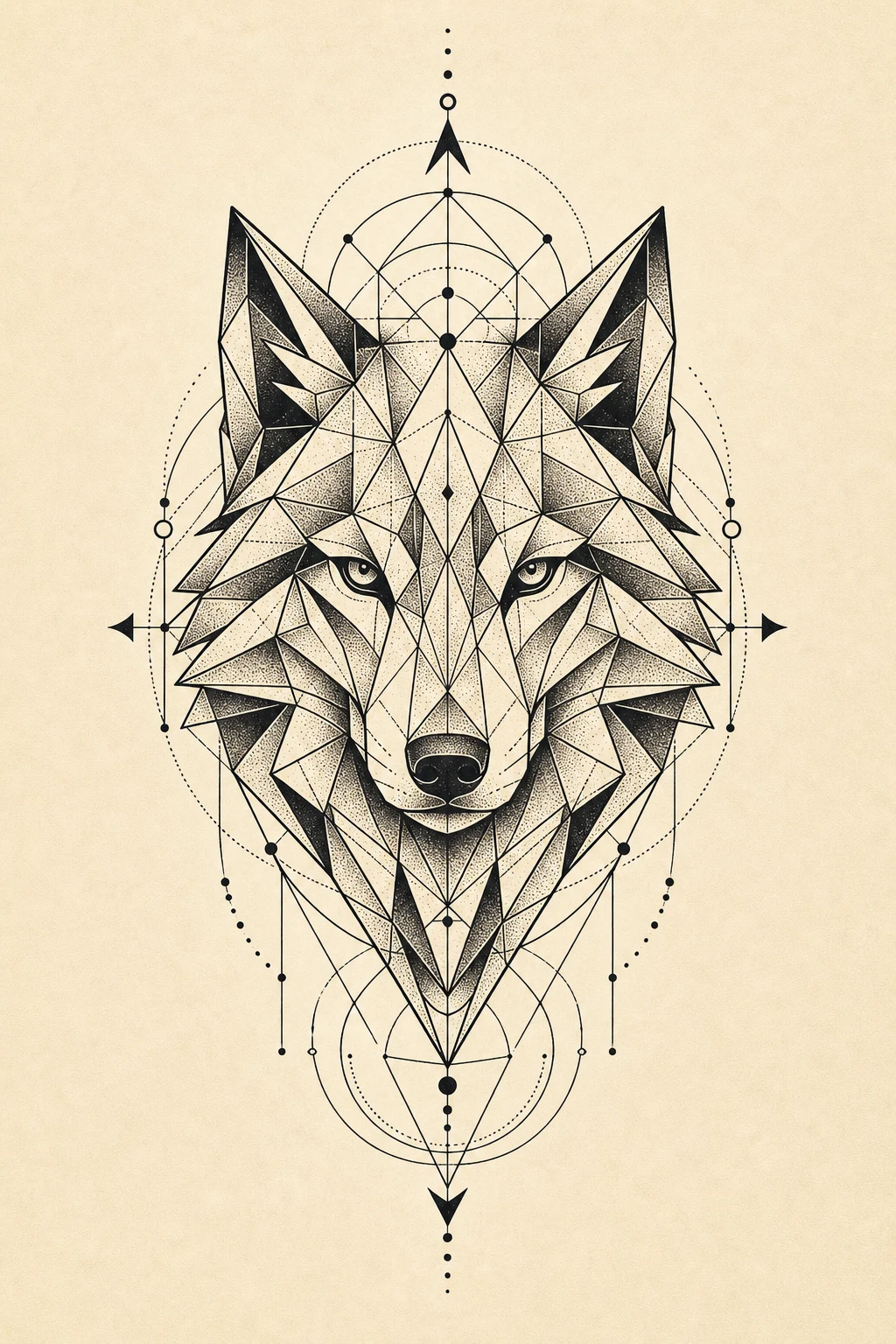
The best subjects for geometric usually share these traits:
- A clear central axis or a clean silhouette
- Repetition that can be sized up rather than crammed small
- Room for negative space to carry part of the pattern
- A reason for every line, not lines added to fill a gap
Placement Changes The Read
Where the piece sits changes what it is, more than in almost any other style, because symmetry only works when the body cooperates.
The sternum and spine are made for ceremonial symmetry — they hand you a built-in axis, so a mandala reads as anchored rather than floating. Forearm bands and shoulder caps suit wraparound work, where the pattern follows the curve of the limb instead of fighting it. Knees and elbows make strong radial anchors, a mandala sitting over the joint like a hub. A full sleeve lets geometric breathe as flow, panels of pattern linked by open skin. If you are torn, a quick mockup in the OpenInk generator shows the same design on a sternum and a forearm before you commit.
Scale is the quiet rule under all of it. A mandala that works at palm size on a thigh turns to mush at coin size on a wrist. Size the rings to the body part, not the reference photo.
Aging, Healing, And Why The Lines Blow Out
Geometric has a specific way of failing over time, worth knowing before you commit.
Fine parallel lines and tiny repeated rings are the most blowout-prone marks in tattooing. Ink spreads sideways as it settles, so where lines started close they merge and where rings started small they fill in. Five years on, a tight lattice can read as a grey field and a delicate mandala can lose its inner three rings entirely. The choices that age gracefully plan for that spread: heavier anchor lines, dot fades instead of solid micro-rings, generous spacing, and negative space carrying part of the pattern so the skin does some of the work.
Follow your artist's healing instructions to the letter while the lines settle. The Cleveland Clinic's tattoo aftercare guidance covers gentle washing, moisturizing, and leaving the piece alone, and the American Academy of Dermatology notes that UV light fades ink, so healed geometric still wants sunscreen and shade.
Ask to see healed geometric work, not fresh — fresh crisp lines tell you nothing about year three.
Where Geometric Goes Wrong
Most geometric disasters come from the same handful of decisions:
- A crooked or floating center, with no axis tying the piece to the body
- Rings and lines drawn too small or too tight to survive healing
- Packing every space until the symmetry reads as noise instead of pattern
- Ignoring body flow, so a flat diagram fights a curved limb and looks pasted on
- Micro-text tucked inside the pattern, which blurs into an illegible smear within a year
This is the most stencil-dependent style there is. Symmetry-dependent work needs an artist with real stencil and machine discipline — clean line weight, even spacing, a center measured rather than eyeballed. Freehand romance is where geometric breaks. If an artist wants to wing a mandala by hand on the spot, walk.
Designing A Geometric Tattoo With OpenInk
Geometric is one of the best styles to test in an AI generator because all of its rules are visible. Symmetry, scale, line weight, negative space — you can see at a glance whether a draft obeys them.
Start with a prompt like this:
"Sacred-geometry mandala tattoo for the inner forearm, single stable center, larger core rings rather than tiny ones, crisp even linework, open skin left between the rings, clear radial symmetry, no micro-text, no tight parallel hatching, readable from across the room, tattoo flash style, spaced for clean healing."
Then push the draft one direction at a time:
- A larger center ring
- Fewer rings overall
- More negative space between bands
- Placement preview, sternum versus forearm
- Dot-fade shading instead of solid line
For prompt structure, pair this with our ChatGPT Images 2.0 tattoo prompt guide, and browse the geometric tattoo ideas gallery for a feel for what holds up. When the direction is clear, bring it into the OpenInk AI tattoo generator and test geometric as a design system — center, scale, spacing, and negative space working together.
Geometric is honest math on dishonest skin. It rewards the artist who plans for year ten, not week one.
Related Geometric And Sacred-Geometry Guides
- Blackwork Tattoo Guide — how negative space and contrast do the real drawing
- Dotwork tattoos — the sacred-geometry sibling lane, where stippling builds the same forms one dot at a time
Frequently asked
Why do geometric tattoos blow out?
Fine parallel lines and tiny repeated rings are the most blowout-prone marks in tattooing. Ink spreads sideways as it settles, so lines that started close merge and rings that started small fill in. Five years on, a tight lattice can read as a gray field and a delicate mandala can lose its inner three rings entirely.
Is it disrespectful to get a mandala tattoo?
You do not need to be a practitioner to wear one, but the form has owners and it costs nothing to know that. A mandala is a cosmic diagram in Hindu and Buddhist practice, a map of the universe built around a center. In Tibetan Buddhism the sand mandala is built grain by grain over days and then ritually swept away, because it exists to embody impermanence. Carry it with some weight rather than as wallpaper.
Where do geometric tattoos look best on the body?
Sternum and spine, because they hand the design a built-in axis and a mandala reads as anchored instead of floating. Forearm bands and shoulder caps suit wraparound patterns that follow the curve of a limb. Knees and elbows make strong radial anchors, with the mandala sitting over the joint like a hub.
Can a mandala tattoo be freehanded?
Walk out if an artist offers. Geometric is the most stencil-dependent style there is, and symmetry-dependent work needs clean line weight, even spacing, and a center that was measured rather than eyeballed. A crooked center is the mistake nobody catches in the stencil and everybody sees forever.
Turn this guide into a tattoo draft
Keep the motif from this article, then test style, placement, and line weight before you talk with an artist.