Japanese Dragon Tattoo: Meanings, Styles & Mistakes
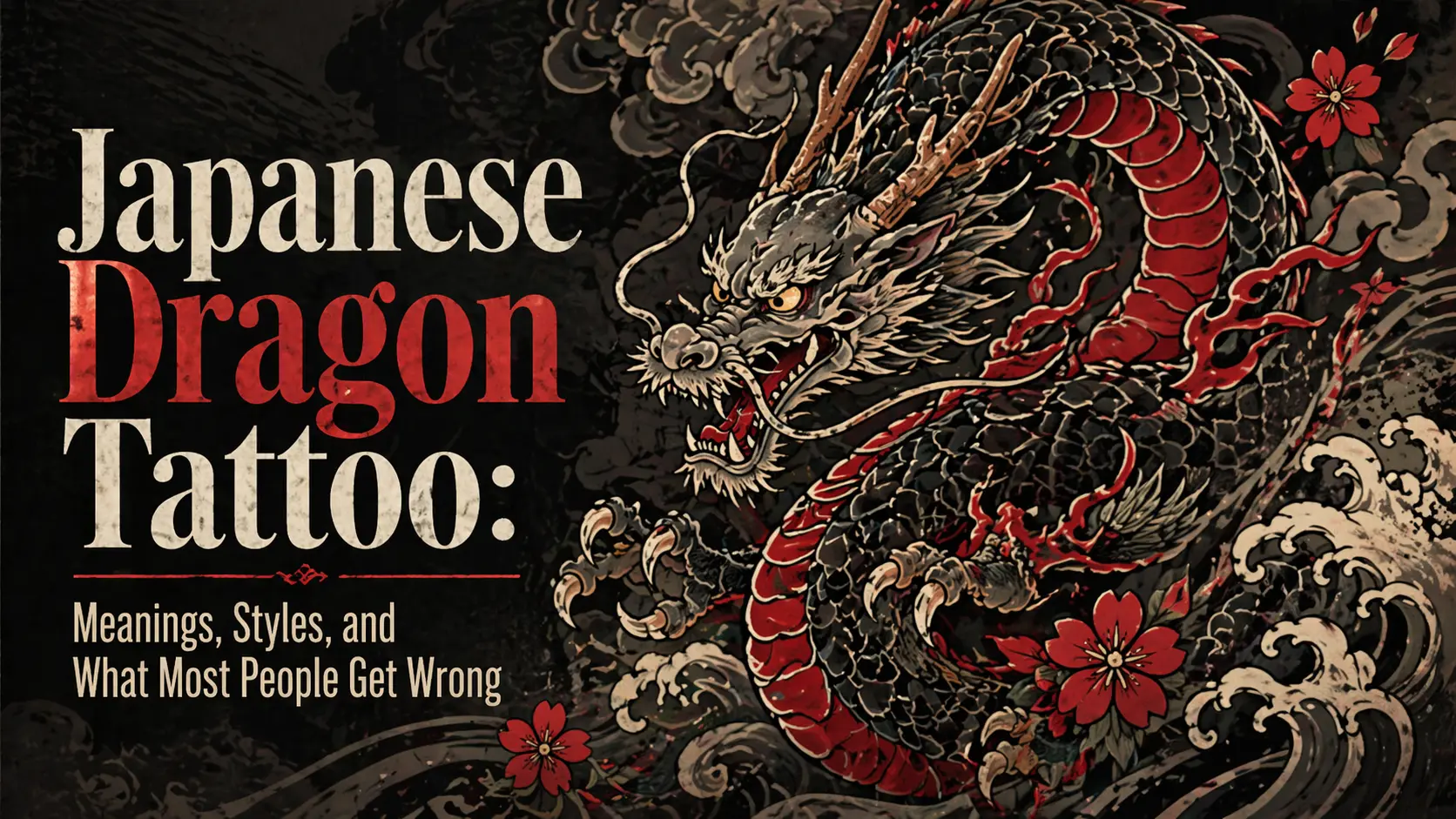
If you're reading this, you've probably already decided you want a dragon tattoo. Good. The dragon is one of the most powerful motifs in Japanese tattooing — maybe the most powerful — and it's been that way for centuries.
But the dragon you're picturing in your head right now might be the wrong one.
If you grew up watching Western fantasy, your mental image is probably a winged, fire-breathing lizard perched on a pile of gold. That's not what a Japanese dragon is. Not even close. And if you walk into a tattoo shop asking for "a dragon" without understanding the difference, you might end up with something that looks impressive but says nothing — or worse, says the wrong thing.
So let's talk about what Japanese dragons actually are, what they mean, and how to wear one properly.
Eastern Dragons vs. Western Dragons
The difference between Eastern and Western dragons isn't a matter of style preference. It's a completely different creature with a completely different role in the culture's imagination.
Western dragons are adversaries. From Beowulf to Game of Thrones, they hoard treasure, breathe fire, and exist to be slain by heroes. They're symbols of chaos, greed, and primal danger. The dragon is the obstacle. The hero is the point.
Eastern dragons — and Japanese dragons specifically — are the opposite. They're divine beings. Guardians. Forces of nature that bring rain, control the seas, and protect the dharma. You don't slay them. You revere them.
Here are the key physical differences:
- Body shape. Eastern dragons are serpentine — long, sinuous bodies that coil through clouds and water. No wings. They fly through spiritual power, not aerodynamics. Western dragons are stocky, winged, built like weaponized dinosaurs.
- Element. Western dragons breathe fire. Japanese dragons command water and wind. They live in oceans, rivers, and rainclouds. When a Japanese dragon appears in a storm, it's not attacking — it's arriving.
- Claws. Japanese dragons traditionally have three claws per foot. Chinese dragons have five (imperial symbolism) or four. This is one of the most reliable ways to identify origin in tattoo art.
- Horns and whiskers. Japanese dragons have deer-like antlers and long, flowing whiskers. Western dragons have bat-like wings and often lack facial hair entirely.
- Temperament. A Western dragon is dangerous by nature. A Japanese dragon is dangerous the way the ocean is dangerous — not because it wants to hurt you, but because it's vastly more powerful than you and doesn't particularly care about your plans.
This distinction matters for your tattoo because it determines the emotional register of the entire piece. A Western dragon says "I'm dangerous." A Japanese dragon says "I'm connected to something larger than myself."
The Dragon in Japanese Culture
Dragons entered Japan through China and Korea, carried by Buddhism and Chinese cosmology. But Japan didn't just copy the Chinese dragon — it adapted it, gave it local mythology, and eventually made it something distinctly Japanese.
The Four Dragon Kings (Ryūjin)
In Japanese mythology, the dragon king Ryūjin (龍神) rules the ocean from a palace beneath the waves. He controls the tides, commands sea creatures, and holds the magical tide jewels (shinju) that can cause floods or droughts. Fishermen, sailors, and coastal communities across Japan built shrines to Ryūjin — not out of fear, but out of respect for the power that sustained their livelihoods.
This is important for tattoo context: when you put a dragon on your skin in the Japanese tradition, you're invoking a god-figure, not a monster. The cultural weight is closer to an angel than a demon.
Buddhism and the Dragon
In Japanese Buddhism, dragons are protectors of the dharma — they guard sacred teachings and sacred spaces. Walk into almost any major Zen temple in Japan and look up: there's a dragon painted on the ceiling. Kennin-ji in Kyoto, Tenryū-ji ("Temple of the Heavenly Dragon"), Ryōan-ji — dragon imagery is everywhere in Japanese sacred architecture.
The dragon's association with wisdom (chie) in Buddhism also explains why it's paired so often with clouds and mist in tattoo compositions. Clouds represent the unknowable — the mysteries that surround enlightenment. A dragon emerging from clouds is a visual metaphor for wisdom breaking through ignorance.
Edo Period: When Dragons Became Tattoos
The dragon became a major tattoo motif during the Edo period (1603–1868), when the illustrated novel Suikoden — a Japanese retelling of the Chinese classic Water Margin — became massively popular. The novel's heroes were covered in elaborate tattoos, including dragons, and the woodblock prints by artists like Utagawa Kuniyoshi sparked a tattoo craze among Edo's working class.
Firefighters (hikeshi) were especially drawn to dragon tattoos. The logic was both spiritual and practical: dragons command water, and firefighters fight fire. A dragon tattoo was protection, identity, and a declaration of what you stood for — all at once.
What Different Dragon Elements Mean
Every part of a Japanese dragon tattoo carries specific meaning. The imagery is a vocabulary you can read.
Color
Black/ink-wash dragons are the most traditional. They emphasize form, movement, and the interplay of positive and negative space. A black dragon says "I respect the tradition." It's also the most versatile — it ages beautifully and works with any future additions to the composition.
Blue/indigo dragons are tied to the East, spring, and new beginnings. In the Chinese and Japanese cosmological system of the Four Sacred Beasts, the Azure Dragon (Seiryū) guards the eastern direction. A blue dragon is aspirational — it's about what's ahead, not what's behind.
Gold dragons represent nobility, prosperity, and imperial power. In Japanese art, gold dragons appear on screens, temple walls, and ceremonial objects. As a tattoo, gold dragons are bold and unapologetic. They're not subtle, and they're not trying to be.
Red dragons are associated with passion, intensity, and sometimes aggression. Red is the most emotionally charged color choice, and in a full Japanese composition, it reads as fire-level energy — fitting, since the dragon already commands nature's raw power.
Green dragons are less common in traditional Irezumi but appear in some regional traditions. They tend to emphasize the dragon's connection to nature, growth, and vitality.
Claws and Posture
A dragon with claws extended and mouth open is in an active, aggressive posture — it's asserting dominance, often depicted mid-roar with a thunder pearl (hōju) gripped in one claw. This is the "power" reading.
A dragon with a closed mouth and relaxed claws is in a contemplative posture. It's watching, waiting, aware. This reading leans more toward wisdom and patience.
In traditional Irezumi, the pairing of one open-mouthed dragon and one closed-mouthed dragon mirrors the A-un (阿吽) concept — the Buddhist alpha and omega, represented by the open and closed mouth. You see this in temple guardian statues all over Japan. In tattoo terms, a paired dragon composition carries the meaning of totality: beginning and end, aggression and restraint, inhale and exhale.
The Dragon Pearl (Hōju)
The flaming orb gripped in a dragon's claw or floating near its head is the hōju (宝珠) — the wish-fulfilling jewel from Buddhist tradition. It represents spiritual power, wisdom, and the ability to achieve enlightenment. A dragon chasing or holding the pearl is the single most common composition in Japanese dragon tattoos, and it carries the most universally positive meaning: the pursuit of wisdom and spiritual fulfillment.
Clouds, Waves, and Wind Bars
The background of a dragon tattoo does real work. It sets the context.
- Clouds (kumo) place the dragon in the sky, among the divine. Cloud compositions emphasize the dragon's spiritual nature.
- Waves (nami) place the dragon in or near water, connecting it to Ryūjin and the ocean. Wave compositions emphasize power and natural force.
- Wind bars (fūjin-style elements) add movement and energy. They're the compositional glue that makes a dragon feel like it's actually moving through space rather than frozen in place.
- Lightning adds drama and reinforces the dragon's role as a storm deity. Traditionally rendered as angular, stylized bolts rather than realistic electricity.
Japanese Dragon Tattoo Styles
Like any major Irezumi motif, dragons can be rendered across a spectrum of stylistic approaches. Each carries different weight.
Traditional Irezumi (Wabori)
The gold standard. Heavy black outlines, saturated color fills, and strict compositional rules inherited from ukiyo-e printmaking. A traditional dragon follows specific anatomical conventions: the "nine resemblances" formula (camel head, deer antlers, rabbit eyes, snake neck, clam belly, carp scales, eagle claws, tiger paws, ox ears) that's been codified since Chinese painting manuals reached Japan.
Traditional dragons demand space. They're designed for full sleeves, chest panels, back pieces, and bodysuits. A traditional Wabori dragon crammed into a forearm will feel like a photograph zoomed in too far — technically accurate but compositionally broken.
This style is for people who want to participate in the tradition, not just reference it.
Neo-Japanese
Same anatomical foundation as traditional Irezumi, but with a modern sensibility. Finer lines, broader color palettes (including non-traditional hues like purple, teal, and muted pastels), and more flexible composition rules.
Neo-Japanese dragons work better in medium-sized pieces — half sleeves, thigh panels, large calf wraps — because the style's flexibility allows the design to breathe in tighter spaces. The trade-off is that you're stepping outside the tradition, which some purists will notice.
If you want the cultural vocabulary of a Japanese dragon without committing to a full traditional composition, this is probably your lane.
Black and Grey Realism
Strips the dragon down to pure form, texture, and shadow. Black and grey dragon tattoos can carry remarkable detail — individual scales, the texture of horn and whisker, the weight of the body coiling through space.
This style works particularly well for people who want the dragon as a sculptural presence rather than a narrative element. It reads more like a museum piece than a story — which is its own kind of power.
Illustrative / Contemporary
The most experimental direction. Think manga-influenced proportions, graphic novel line weights, abstract backgrounds, or deliberate stylistic fusion with other tattoo traditions.
This is where you'll find the most personal expression, but also the highest risk of losing the dragon's cultural identity. A dragon that's been stylized past the point of recognition stops being a Japanese dragon and becomes a generic fantasy creature — which defeats the purpose.
Who Should Get a Japanese Dragon Tattoo?
Let's be direct: anyone can get a dragon tattoo. There's no cultural gatekeeping on this motif the way there might be with, say, specific tribal patterns or religious iconography. Dragons belong to everyone, and Japanese tattoo artists have been putting them on non-Japanese clients for decades.
That said, the dragon suits certain people and certain moments particularly well:
People in transition. The dragon is fundamentally about transformation and power — not power over others, but the power to become something different. If you're coming out of a difficult chapter, building something new, or marking a turning point, the dragon fits.
People who value discipline. In the Irezumi tradition, the dragon isn't wild — it's controlled power. It resonates with martial artists, athletes, entrepreneurs, and anyone whose life is built around channeling intensity into structured effort.
People building a larger Japanese composition. If you already have a koi, a Hannya, or cherry blossoms and you're working toward a cohesive Japanese bodysuit or sleeve, the dragon is often the centerpiece that everything else orbits around.
People who just love the art form. Honestly? This is the best reason. If you look at a traditional Japanese dragon and feel something — if the movement, the power, the beauty of the form pulls at you — that's enough. You don't need a philosophical justification for a tattoo that moves you.
Placement Guide
Dragon placement is about more than where it fits. Where you put it changes what it says.
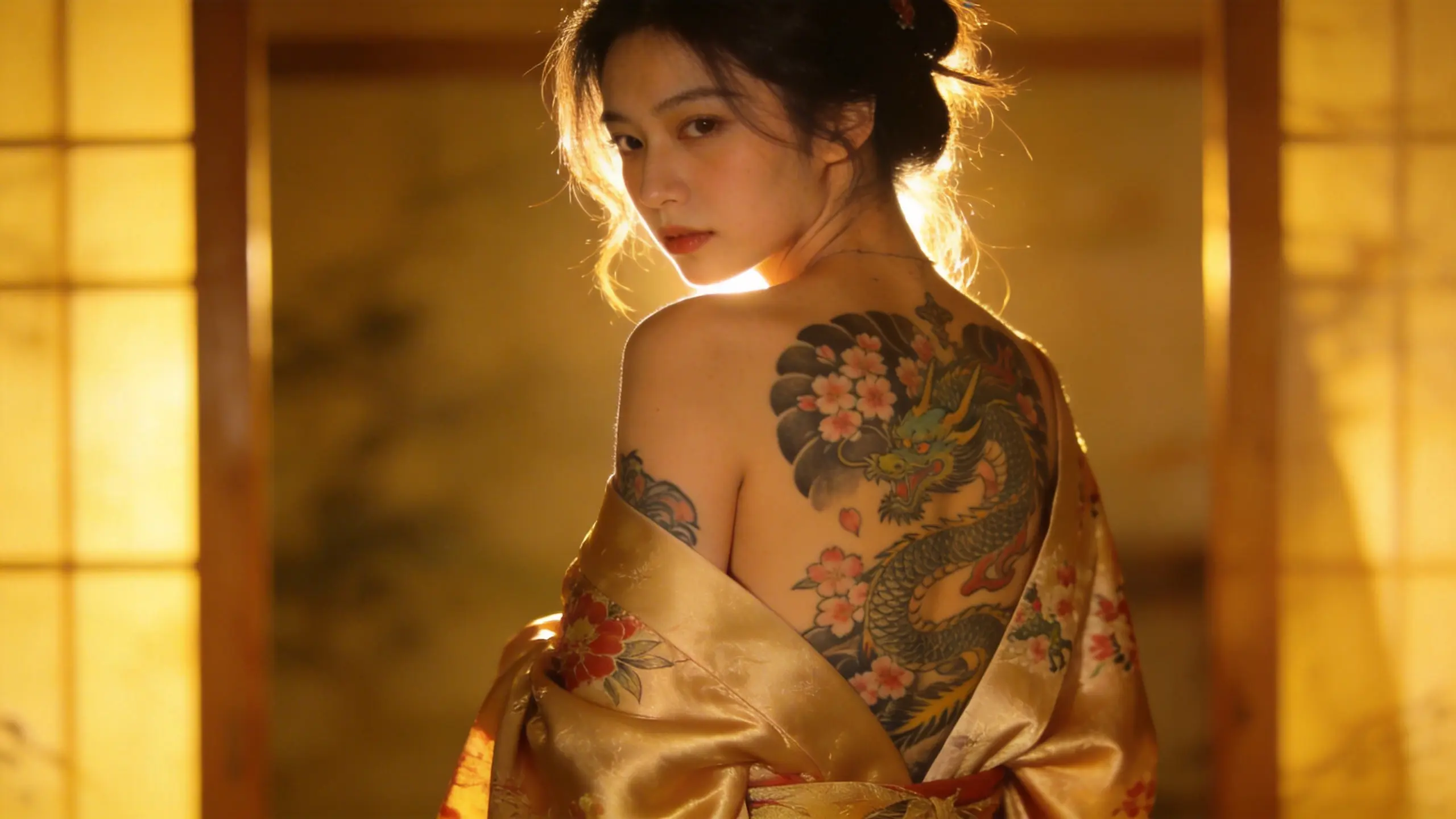
Full back piece. The definitive dragon placement. A dragon spiraling across your entire back is the pinnacle of Irezumi — it's what the tradition was designed for. This is a commitment piece, and it should be treated as one: plan the composition carefully, choose your artist with extreme care, and expect the process to take multiple long sessions.
Full sleeve. The most popular large-format placement. A dragon coiling from shoulder to wrist gives you the full narrative — head, body, tail, clouds, waves — with the added benefit of the arm's natural curves guiding the dragon's movement. The dragon's head traditionally sits on the upper arm or shoulder, with the body wrapping down.
Chest panel. In traditional bodysuits, the chest dragon is often paired with a back piece or opposing motif. A chest dragon reads as a guardian — it's positioned over the heart, facing outward.
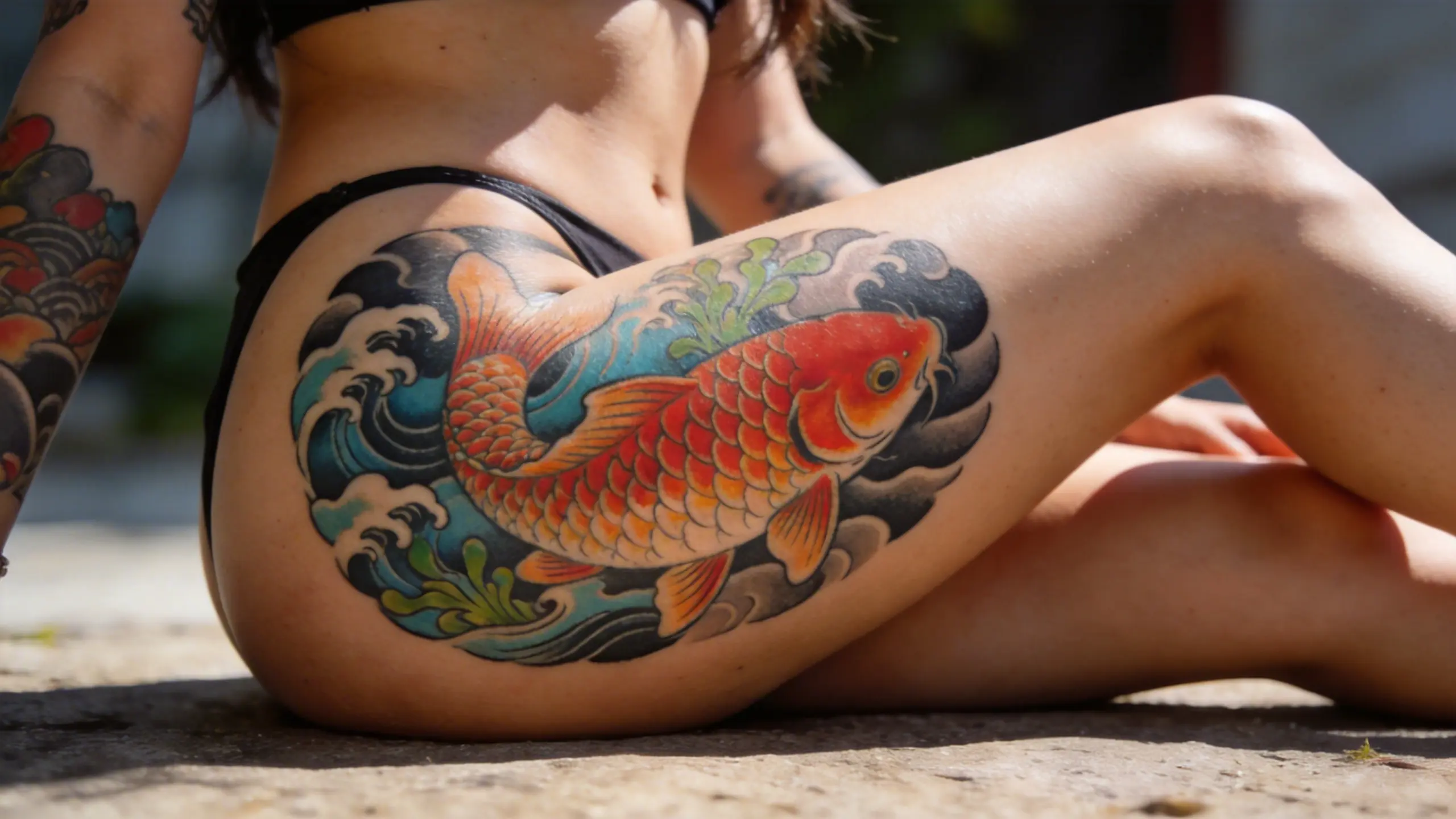
Thigh and leg. An increasingly popular placement that gives the dragon room to move vertically. The thigh's broad, flat surface is especially good for detailed traditional work.
Forearm. Possible, but be careful. A full dragon on a forearm often requires simplification that can flatten the design. If you're set on forearm placement, consider a Neo-Japanese or illustrative approach rather than traditional Wabori.
Common Mistakes (and How to Avoid Them)
Mixing Eastern and Western elements. A Japanese dragon with bat wings, or a Western dragon's head on a serpentine body. These hybrids usually read as confused rather than creative. Pick a tradition and commit to it.
Going too small. Dragons are large-format subjects. A three-inch dragon loses its power. If you want something small, consider a dragon claw, a single coil of the body, or the dragon pearl on its own — elements that work at smaller scales.
Ignoring the background. A dragon floating on bare skin looks unfinished. Clouds, waves, wind bars — these aren't optional. They're what make the dragon feel like it exists in a world rather than being pasted onto your body.
Random color choices. Picking dragon colors because they "look cool" without understanding the traditional associations can create a piece that reads as visually attractive but culturally empty. Know what the colors mean, then decide whether to follow or deliberately break the conventions.
Combining clashing motifs. A Japanese dragon paired with tribal patterns, geometric mandalas, or Western traditional elements creates visual noise. If you're going Japanese, go Japanese. The tradition has centuries of compositional wisdom about what pairs well together.
Designing Your Dragon with OpenInk
If you're at the "I know I want a dragon but I can't visualize the composition" stage, try giving the AI specific parameters. Something like:
"Black and gold Japanese dragon coiling upward through storm clouds, three-clawed, mouth open gripping a dragon pearl, traditional Irezumi style, full sleeve composition for left arm, wind bars and lightning in the background"
The more specific you are about style, posture, color, and composition, the better the result. Try different variations:
- Change the posture from aggressive (mouth open) to contemplative (mouth closed)
- Swap clouds for waves to shift the element association
- Try different color schemes to see how the emotional register changes
- Experiment with the dragon pearl's position — held in the claw vs. floating nearby
You can fine-tune scale details, expression, and background density in InkCanvas before bringing your favorite version to a tattoo artist for consultation.
The dragon has been the king of Japanese tattoo motifs for over 400 years. There's a reason for that, and it goes beyond looking impressive. Done right, a dragon tattoo tells people something true about who you are and what you're connected to.
Don't rush this one. Get it right.
Back to Japanese Tattoo Series
Design your dragon tattoo with OpenInk
Frequently asked
What does a Japanese dragon tattoo mean?
Water, wisdom, and protection rather than menace. Eastern dragons are divine beings, not adversaries: the dragon king Ryūjin rules the ocean and its tides, and in Japanese Buddhism dragons guard the dharma, which is why they are painted on the ceilings of Zen temples. A Western dragon says I am dangerous. A Japanese dragon says I am connected to something larger than myself.
How many claws does a Japanese dragon have?
Three per foot. Chinese dragons have five, which carries imperial symbolism, or four, and claw count is one of the most reliable ways to identify a dragon's origin in tattoo art. Japanese dragons also carry deer-like antlers and long flowing whiskers, and no wings at all: they fly through spiritual power, not aerodynamics.
Can a non-Japanese person get a Japanese dragon tattoo?
Yes. There is no cultural gatekeeping on this motif the way there is on specific tribal patterns or religious iconography, and Japanese tattoo artists have been putting dragons on non-Japanese clients for decades. What matters more is committing to one tradition instead of mixing in bat wings or a Western dragon's head, which reads as confused rather than creative.
How big does a Japanese dragon tattoo need to be?
Big enough for a back piece, a full sleeve, a chest panel, or a thigh. A three-inch dragon loses its power, and traditional Wabori crammed into a forearm feels like a photograph zoomed in too far. If you want something small, wear one element instead: a claw, a single coil of the body, or the hōju pearl on its own.
Turn this guide into a tattoo draft
Keep the motif from this article, then test style, placement, and line weight before you talk with an artist.